It happens all the time, a resident reports a slow-growing stain on an interior wall or water seeping in from under a window. Someone notices cracking concrete on a balcony or parkade, but no one is quite sure how far the issue goes. For strata councils and property managers, exterior building problems often begin with small signs followed by big questions. A drone inspection of your building’s envelope helps provide a clearer view of hard-to-reach areas so you can better assess problems and plan for repairs before they grow in scope and expense.
Using drones to assess your building’s envelope
A drone inspection of your building envelope uses commercial-grade drones equipped with high-resolution cameras, thermal imaging and even automated flight planning to assess a building’s exterior envelope and systems. Instead of relying on ground-level observations, guesswork, or setting up special access equipment to explore what might be happening, drones can capture in-depth images and data of difficult-to-reach areas of the property, including exterior walls, roof edges, flashings, sealant joints, cladding systems, and expansion joints.
Once collected, that visual information can be reviewed and shared to identify signs of deterioration, moisture concerns, failed sealants, cracked concrete, damaged cladding and other issues that may not otherwise be obvious or visible.
The result is a more complete visual record of the building’s condition, giving property managers, strata councils and building owners a clearer understanding of where issues may be developing, what may need closer investigation and how to plan for repairs.
How drone inspections help BC properties stay ahead of damage
Buildings in British Columbia have to face everything Mother Nature can throw at them. In the Lower Mainland, extended periods of rain can increase the risk of moisture finding its way behind exterior walls, windows, balconies and other building envelope components. Coastal salt air can also contribute to metal corrosion and concrete deterioration. And as BC summers become hotter and drier, UV exposure and temperature swings can add further wear and stress to sealants, coatings, cladding and other exterior surfaces.
Over time, normal building movement, weather exposure, and aging sealants can create small cracks, gaps or weak points where water can enter and cause damage. These issues are not always easy to see from the ground, especially on taller buildings or hard-to-access exterior elevations.
Drone inspections give strata councils, property managers and commercial building owners a more efficient way to review exterior conditions across the property. By identifying signs of deterioration early, they can help support better repair planning before small envelope issues become larger and more expensive problems.
A closer look at what drone inspections can reveal
Drone inspections can help identify many common building envelope issues, especially in areas that are difficult to see clearly from the ground. High-resolution imagery gives property managers, strata councils and building owners a closer look at exterior surfaces, transitions and hard-to-reach details across the building.
At a glance: Common issues drone inspections can help identify:
+ Concrete Cracking
Visible cracks in concrete walls, balconies, columns, parkades and other exterior surfaces.
+ Concrete Spalling
Areas where concrete is breaking, flaking or deteriorating, sometimes exposing structural materials beneath.
+ Sealant Failures
Cracked, split, missing or aging sealants around joints, transitions, windows and exterior penetrations.
+ Window Perimeter Deterioration
Wear, gaps, staining or failed materials around window frames and glazing systems.
+ Waterproofing Concerns
Signs of membrane wear, staining, water movement or areas where waterproofing may no longer be performing properly.
+ Cladding and Architectural Panels
Damaged, loose, shifted or deteriorating exterior panels, siding or cladding systems.
+ Balcony Deterioration
Cracking, staining, coating wear, drainage concerns or other visible issues on balcony surfaces and edges.
+ Roof Edge Defects
Problems around parapets, roof edges, flashings, drainage points and exposed transition areas.
+ Corrosion Staining
Rust-colored staining that may point to moisture exposure, metal corrosion, or reinforcing steel concerns.
+ Efflorescence
Patches of white mineral deposits on concrete, masonry or other surfaces that can indicate moisture intrusion.
+ Flashing Deficiencies
Visible gaps, damage or deterioration at flashings and other key water-shedding details.
Water runs, but it can’t hide: Using thermal imaging to detect moisture
Thermal imaging adds another layer of information to a building envelope drone inspection. While high-resolution photos show visible surface conditions, thermal cameras measure temperature differences in exterior walls, balconies, cladding systems and other building surfaces.
This matters because wet materials can hold and release heat differently than dry materials. In the right conditions, thermal imaging may help highlight areas where moisture could be trapped behind stucco, concrete, EIFS, wall assemblies or cladding systems.
Thermal imaging does not replace hands-on investigation or testing, but it can help narrow down and identify where closer investigation may be needed, reducing unnecessary exploratory work and giving property managers, strata councils and building owners a more focused starting point for repair planning.
Why use drones for building envelope inspections?
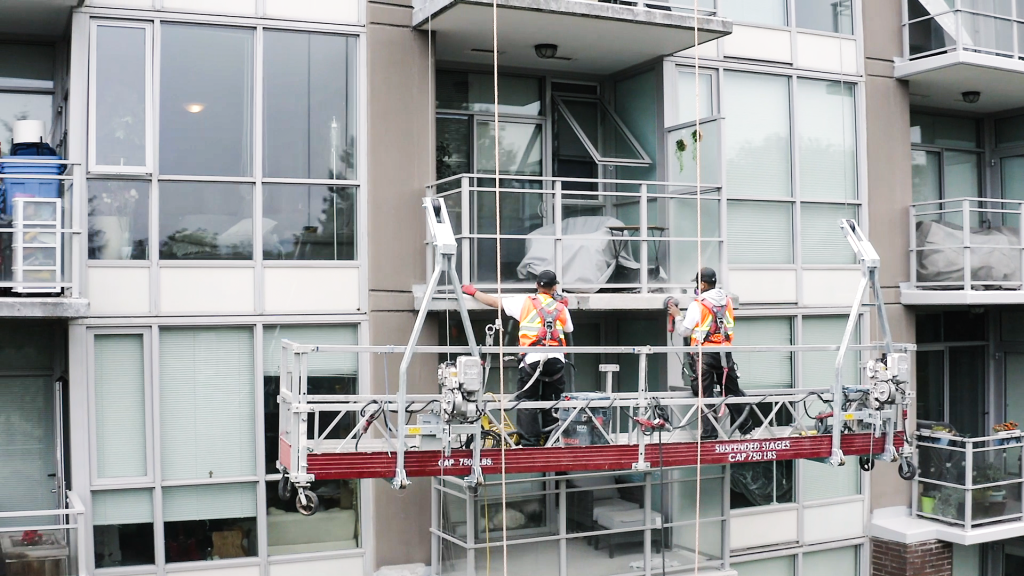
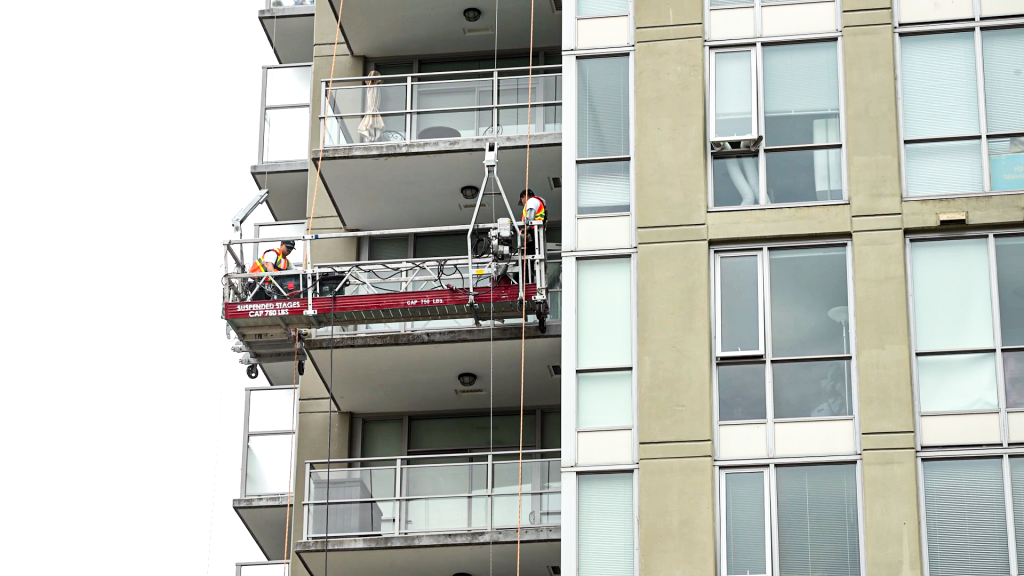
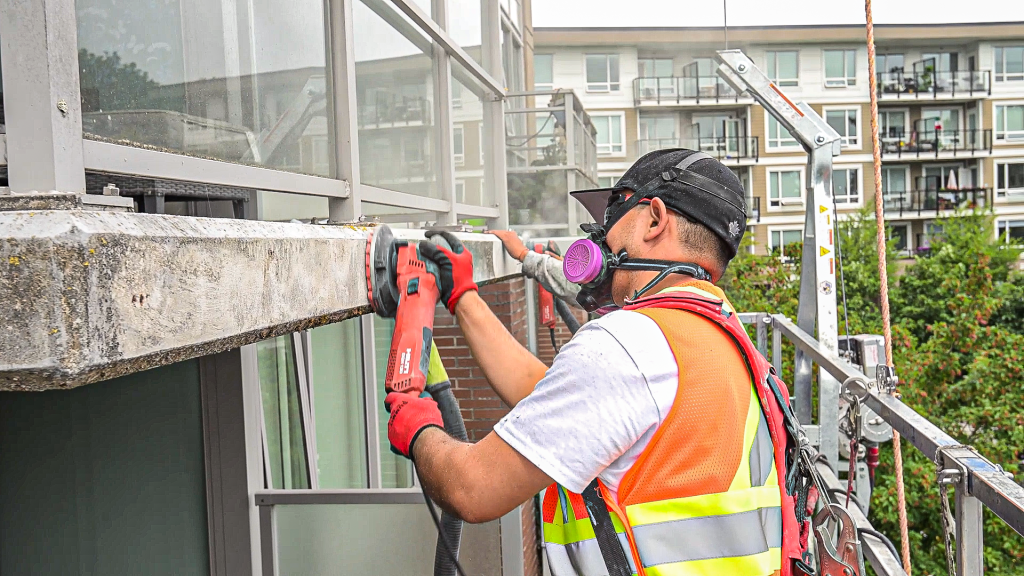
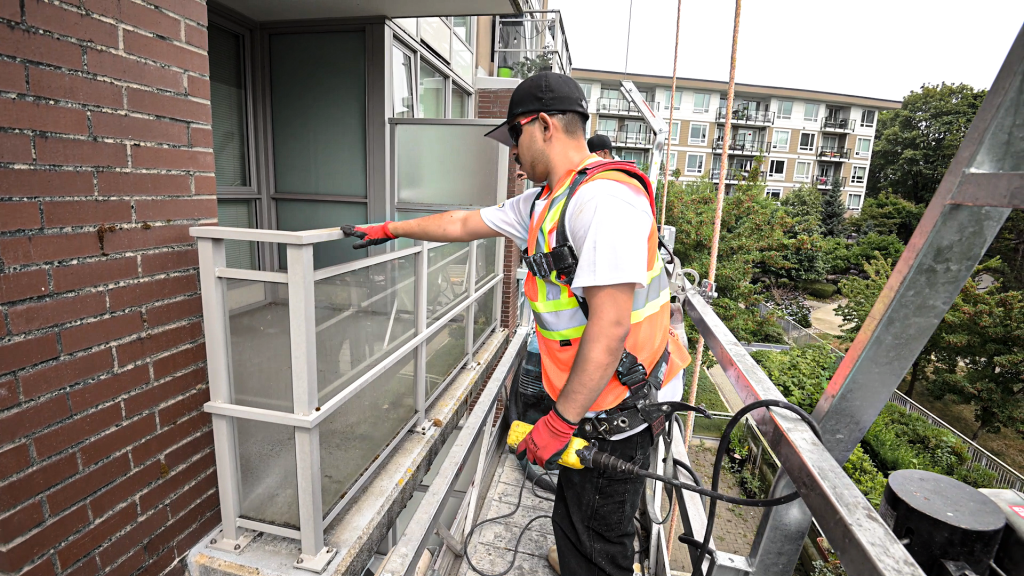
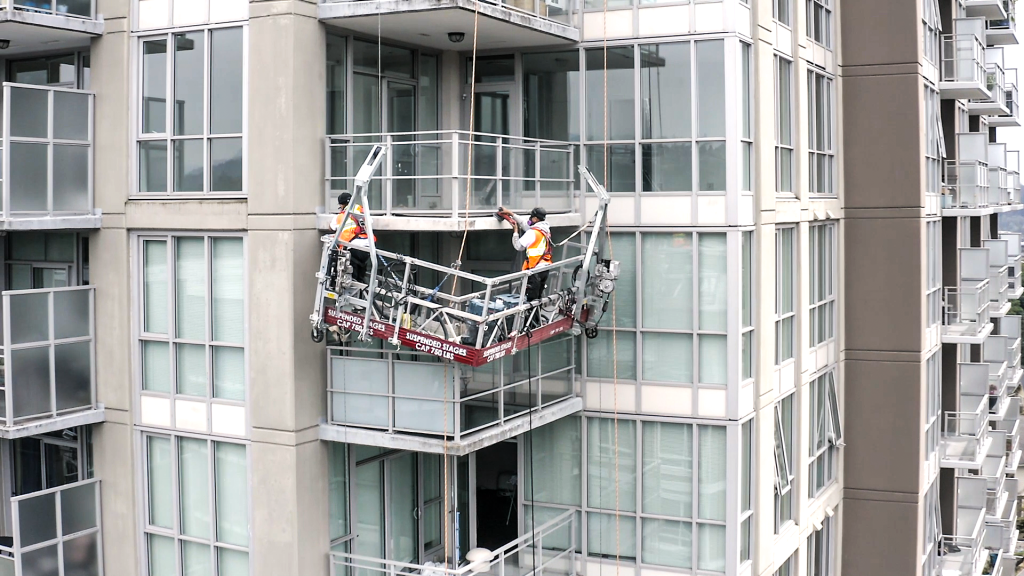
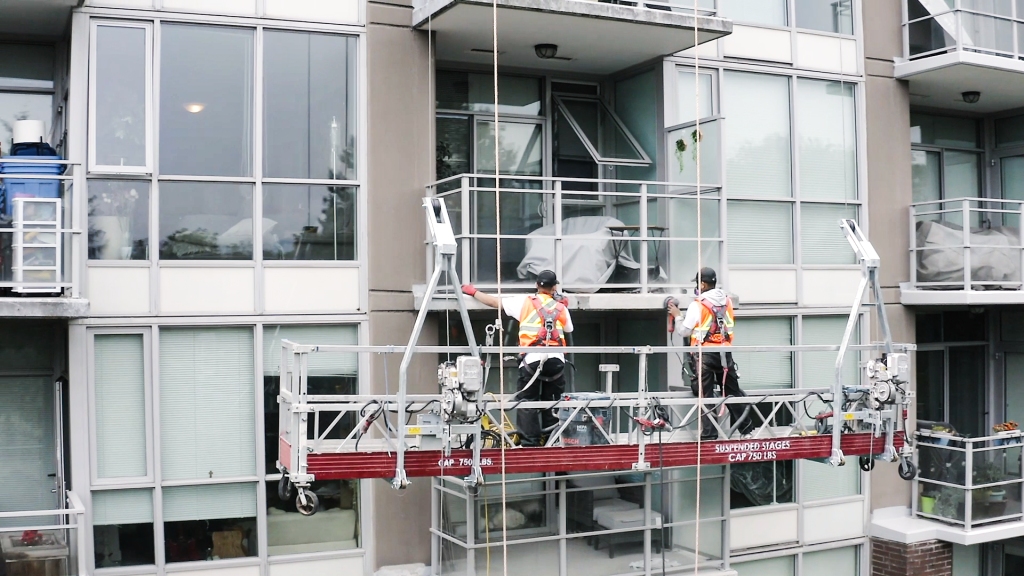
Traditional exterior inspections often require scaffolding, swing stages, boom lifts or other access equipment to get a closer look at specific areas of a building. That can add time, cost, coordination and disruption before the issues you’re investigating are even fully understood.
Drone inspections offer a faster, more efficient way to review hard-to-reach exterior areas. Because the inspection can often be completed with minimal access equipment, drones can help reduce mobilization costs, shorten inspection timelines, limit site disruptions and improve safety by keeping people off ladders, lifts and swing stages where possible.
They also provide a detailed visual record of the building’s exterior condition. Instead of relying on limited viewing angles or spot observations, high-resolution drone imagery can help document facades, balconies, roof edges, sealants, cladding and other envelope components more completely. That gives property managers, strata councils and building owners better information for maintenance planning, repair prioritization and future budgeting.
At a glance: Traditional access vs. drone inspection
+ Access Requirements
Traditional inspections may require scaffolding, swing stages or boom lifts. Drone inspections can often be completed with minimal access equipment.
+ Cost and Mobilization
Traditional access methods can involve higher setup and mobilization costs.
Drone inspections can provide a more cost-efficient first look at exterior conditions.
+ Timelines
Traditional inspections can take longer to coordinate and complete.
Drone inspections can often capture exterior condition information more quickly.
+ Safety
Traditional inspections may require workers at height.
Drone inspections allow much of the visual review to be completed from the ground.
+ Building Coverage
Traditional inspections may focus on selected access points.
Drone inspections can help provide broader facade coverage and a more complete visual record.
+ Documentation
Traditional inspections may rely on notes and spot observations.
Drone inspections provide high-resolution images that can be reviewed, shared and compared over time.
From flight planning to final report: How our drone inspection process works
Successful drone inspections start with a clear plan. Before liftoff, WCP Building Renewal reviews the property, confirms the inspection goals, and develops a safe and practical flight plan for the building.
Our licensed drone pilots carefully capture detailed visual and thermal imagery of the building envelope, including difficult-to-reach exterior walls, roof edges, and balconies. All flights are completed safely, systematically, and in accordance with Transport Canada requirements.
After the inspection, the collected images are processed and reviewed to create a clear visual record of the building’s exterior condition. From there, our team prepares a clear report outlining any observed deficiencies, priority repair areas and recommended next steps.
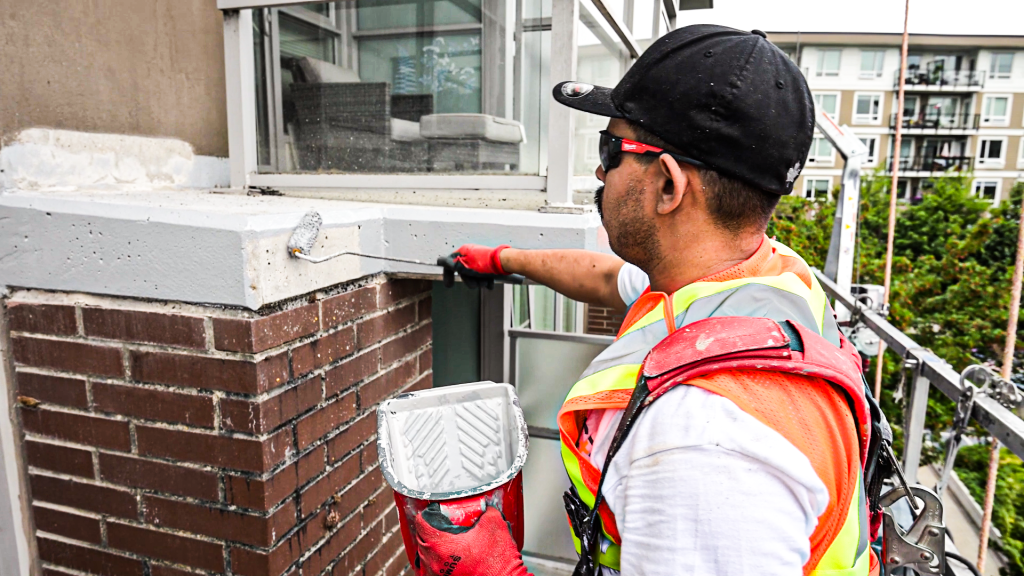
Common Applications for Drone Inspections
Drone inspections and reports are useful for a wide range of building assessment, planning and documentation needs, including:
+ Building envelope assessments
Reviewing exterior walls, windows, balconies, sealants, cladding and other envelope components.
+ Leak investigations
Helping identify visible exterior conditions that may be contributing to water ingress.
+ Depreciation reports and reserve fund planning
Providing current condition information to support better long-term financial planning.
+ Capital planning
Helping property managers, strata councils and building owners prioritize future repair and renewal work.
+ Insurance and warranty documentation
Creating a visual record of building conditions, deficiencies or post-event damage.
+ Preventive maintenance
Identifying smaller issues early so repairs can be planned before conditions worsen.
+ Construction progress documentation
Recording exterior work during larger restoration, renovation or building renewal projects.
+ Post-storm assessments
Reviewing exterior areas after severe weather to look for visible damage or areas needing closer inspection.
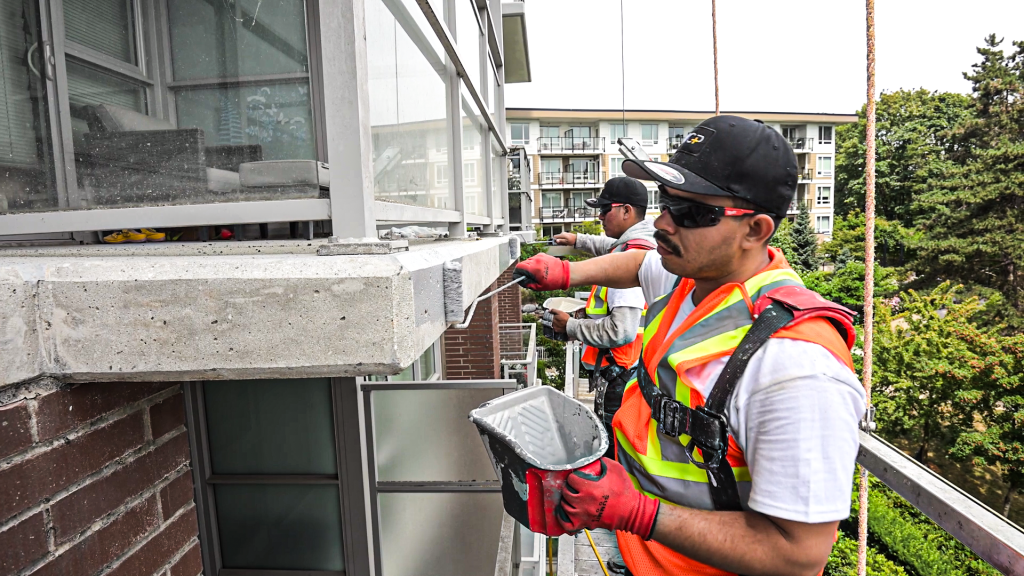
Commercial-grade drone technology, explained
Unlike the toy drones the neighborhood kid undoubtedly loses in a tree, or those used for casual photography purposes, commercial-grade drone technology is designed for professional inspection work.
For building envelope reviews, that means these drones are capable of capturing detailed exterior imagery and data from angles and elevations that are otherwise difficult to assess.
Depending on the building and the inspection goals at hand, a drone inspection may include high-resolution visual imaging, thermal imaging, optical zoom, automated flight planning, and detailed image processing. Together, these tools help create a clearer visual record of exterior conditions across walls, windows, balconies, cladding, roof edges, sealants and other key building envelope components.
Just as importantly, the commercial-grade equipment allows inspections to be completed more consistently over time. That can be useful for property managers, strata councils and building owners who want to monitor changes, compare conditions, and plan repairs and budgeting.
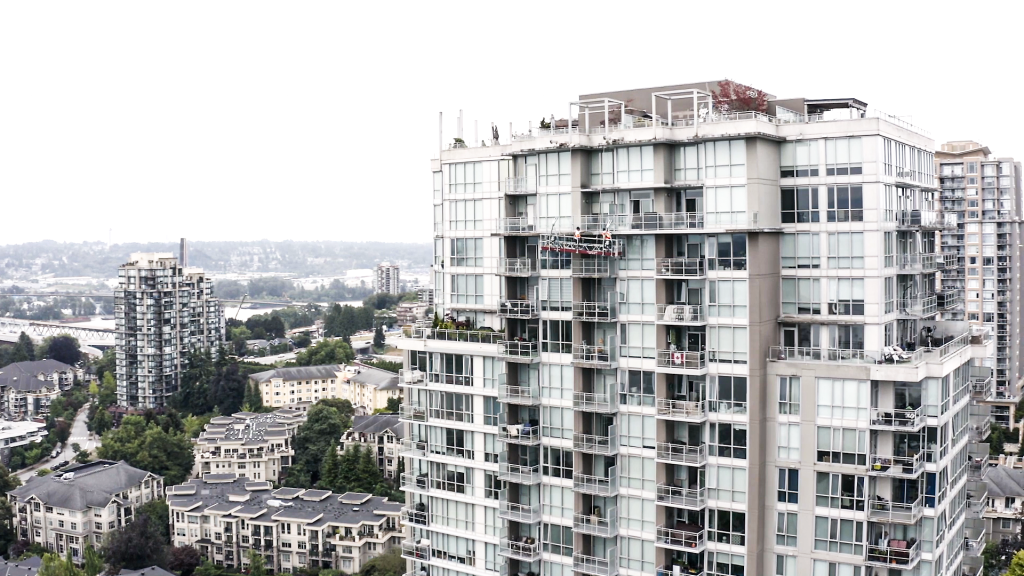
Building and property types where drone inspections are especially useful
Drone inspections can be useful for many different types of strata and commercial properties, especially where exterior access is difficult, expensive or disruptive.
+ High-Rise and Multi-Unit Residential Buildings
Reviewing exterior walls, balconies, window perimeters, sealant joints, concrete surfaces and other hard-to-reach envelope components.
+ Low-Rise Strata and Townhome Communities
Assessing siding, flashings, trim details, roof edges, window transitions and other water-management areas that may be vulnerable to moisture.
+ Warehouses and Light Industrial Properties
Inspecting large wall surfaces, concrete tilt-up panels, expansion joints, roof edges, sealants and other exterior components across wide building elevations.
+ Office Buildings and Shopping Centres
Reviewing curtain walls, glass systems, cladding, architectural panels, sealant lines and transitions between different building materials.
For property teams, the value is not just seeing more of the building. It is being able to document conditions more clearly, prioritize areas of concern and decide what should be reviewed more closely.
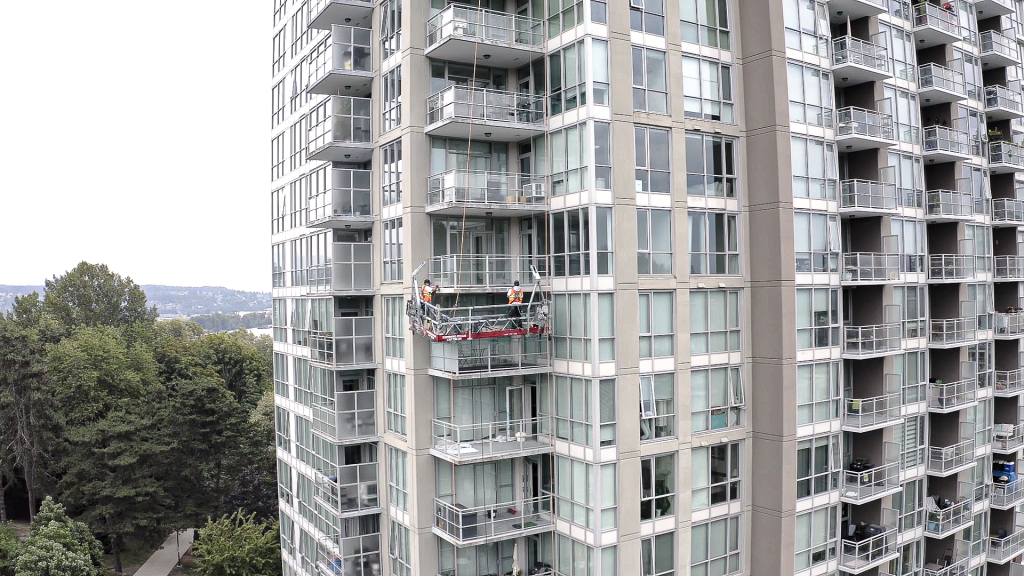
What a drone inspection can, and can’t tell you
Drone inspections can be powerful visual tools, but they are not a replacement for some more traditional types of building investigations.
They are excellent for documenting visible exterior damage or conditions, identifying areas of possible hidden concern and helping guide smarter, more efficient next steps.
A drone inspection can help review facades, balconies, roof edges, cladding, window perimeters, architectural panels, sealant lines, flashing details and other exterior envelope components. And when thermal imaging is included, a drone inspection can also help identify areas where moisture may be something to be concerned about and may require closer review.
However, drones cannot perform “destructive” testing, tap testing, hands-on sounding, interior wall cavity review or other investigative work that requires direct access. Areas encroached on by trees, under overhangs, utilities or other obstructions may also be difficult to inspect properly.
In short, drone inspections are most valuable as part of a practical assessment and repair planning process. While they can’t solve the whole puzzle, they help narrow the scope, document visible conditions, and identify where further investigation should be focused.
Request a Free Consultation
Drone inspections and capital planning
For strata councils, property managers and commercial building owners, drone inspections can support more informed capital planning. Instead of just relying only on estimated material lifespans, limited ground-level observations and guesswork, drone inspections provide current and shareable visual documentation of a building’s exterior conditions.
This information helps prioritize repairs, support reserve fund planning, improve depreciation report discussions, monitor changes over time and plan future restoration projects more strategically.
A clear visual record also makes it easier to communicate with owners, councils, consultants and contractors. When everyone can see and understand the areas of concern, it becomes easier to address the scope, timing and urgency of potential repairs and maintenance.
From drone inspections to practical planning
Using this impressive drone technology for an inspection is only useful if the findings lead to better decisions. Cracked concrete, failed sealants, staining, worn coatings or damaged cladding may be early signs of water ingress, moisture movement or other building envelope issues that deserve closer attention.
At WCP Building Renewal, our team combines drone inspection technology with practical, hands-on building renewal experience. We understand how visible exterior symptoms can connect to underlying repair needs, from concrete repair and waterproofing to sealant replacement, commercial painting, balcony restoration and larger building envelope rehabilitation.
Rather than simply delivering images, our goal is to help property managers, strata councils and building owners turn exterior condition information into practical next steps. That may mean monitoring an area, planning targeted repairs, coordinating further investigation or preparing for a larger restoration project.
So how much will a drone inspection cost?
Like any thorough inspection, the cost of a building envelope drone inspection depends on the size, height and complexity of the property, as well as the type of imaging and reporting required. A smaller visual inspection will usually be less involved than a large high-rise review with thermal imaging, 3D modeling or more detailed reporting.
As a general planning range, a standard commercial or strata drone inspection may fall around $2,500 to $5,000.
Larger or more complex high-rise inspections may range from $5,000 to $12,000, depending on scope.
By comparison, traditional access methods involving scaffolding, swing stages or lift equipment can cost significantly more time and capital before the source of the problem is even fully understood or identified.
The real value to consider is focus. Drone inspections can help identify likely trouble areas early, so property managers, strata councils and building owners can make better decisions about where closer investigation, repairs or access equipment may actually be needed.
Frequently Asked Questions
What are the main benefits of a building envelope drone inspection?
Drone inspections can provide a faster, safer and more cost-efficient way to review hard-to-reach exterior areas. They also create a clear visual record that can help with repair planning, maintenance decisions and future budgeting.
Can drone inspections find hidden water leaks?
Drone inspections can help identify signs that moisture may be present, especially when thermal imaging is used. They do not replace hands-on investigation or destructive testing, but they can help narrow down and identify areas that need closer review.
Will a drone inspection disrupt residents or tenants?
In most cases, disruption is minimal. Drone inspections can often be completed without scaffolding, swing stages or large access equipment. Residents or tenants may receive advance notice so they understand when the inspection is happening.
Are drone inspections compliant with Transport Canada requirements?
Professional drone inspections should be completed by qualified pilots and planned in accordance with applicable Transport Canada requirements. For strata and commercial properties, that planning may also include safety, access and privacy considerations.
Can drone inspections support depreciation reports or capital planning?
Yes. Drone inspections can provide current visual information about the condition of exterior walls, balconies, sealants, cladding, roof edges and other building envelope components. This can help strata councils and property managers plan repairs more confidently.
What kinds of building issues can a drone inspection help identify?
Drone inspections can help identify visible signs of concrete cracking, spalling, failed sealants, deteriorated window perimeters, damaged cladding, balcony wear, staining, efflorescence and other exterior concerns.
How does WCP use drone inspection findings?
WCP Building Renewal uses drone inspection findings to help clients understand where exterior issues may be developing and what next steps may be needed. That may include closer investigation, targeted repairs, waterproofing, sealant replacement, concrete repair, commercial painting or broader building envelope restoration.
A clearer view of the problem means better planning
If your building is showing signs of exterior wear, leaks, concrete deterioration, failed sealants or other envelope concerns, a drone inspection can be a practical and valuable first step. It can help you see more of the building, understand where issues may be developing and decide what needs closer attention before making decisions about larger repair work.
At WCP Building Renewal, we help property managers, strata councils and commercial building owners move from uncertainty to practical next steps. From drone inspections and building envelope reviews to concrete repair, waterproofing, sealant replacement, commercial painting and exterior restoration, our team can help identify the issue, explain what it may mean and plan the right path forward.
Get in touch
To learn more about building envelope drone inspections for your strata or commercial property, contact WCP Building Renewal at [email protected] or call 604-420-5552.
Get in touch today to discuss your building and book a no-pressure consultation.