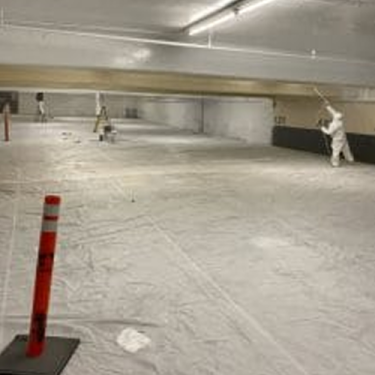
Maintaining any commercial, industrial, or residential property in the Lower Mainland requires constant attention to water-related issues. Due to Vancouver’s high annual rainfall, persistent winter storms, and coastal salt air, moisture penetrates beyond surfaces, exploiting every weak point in the building envelope. For Property Managers, Building Owners, and Residential Strata councils, a small ceiling stain or damp patch often signals an underlying problem with the waterproofing system. If ignored, this can lead to concrete damage, weakened steel reinforcement, and expensive emergency repairs.
Key points to consider for maintenance in the Lower Mainland:
- Proactive maintenance prevents costly emergency capital expenditures.
- Water intrusion is a major threat due to local climate conditions.
- Surface signs like stains or dampness are often early warnings.
- Failing waterproofing systems cause serious structural damage.
Taking a proactive approach to building envelope maintenance saves hundreds of thousands of dollars down the road. This comprehensive guide explores the technical, financial, and logistical realities of leak detection and waterproofing renewal across British Columbia. We will walk through how to identify localized failures, examine advanced membrane and coating options, and outline how to manage a restoration project smoothly without disrupting tenants or destabilizing your strata budget.
Why Waiting on Repairs Gets Expensive Fast
Strata rooms and corporate boardrooms frequently experience this situation: a leak is noticed, but since it only manifests during periods of heavy, wind-driven rain, it is decided to patch the internal drywall and postpone the repair until the following cycle of Strata Depreciation Report reviews. This strategy is a risk that seldom pays off in our rainy climate.
Interior finishes are not the only things that are harmed by water intrusion. A stealthy, continuous degradation process starts when moisture seeps through the external sheathing and into the structural substrate.
+ Impact of Corrosion
The implanted structural steel reinforcement (rebar) rusts when it comes into contact with moisture and salt air from the coast. The surrounding concrete cracks, flakes, and separates as a result of the intense internal pressure created by the rust’s expansion.
+ Substrate Rot
Small leaks beneath the building envelope cause wood rot in the sheathing, framing, and rim joists of wood-frame homes and businesses, jeopardizing the structural integrity of the building.
+ Hazardous Materials Complications
Intrusive testing is frequently necessary to investigate a leak. Opening a wall or removing exterior sealants on a property built before 1990 may expose asbestos or lead paint, necessitating stringent WorkSafeBC abatement procedures.
+ Health and Liability Risks
The main cause of harmful mold development, which lowers indoor air quality and puts building owners at serious risk, is persistent wetness behind walls or under membranes.
By working with a seasoned building renewal contractor, you can protect your long-term asset value by moving your property from a reactive, crisis-driven mindset to a planned, proactive maintenance program.
Core Services: Commercial and Industrial Waterproofing
The operating demands on commercial and industrial buildings are enormous. In these settings, waterproofing solutions must endure harsh weather, chemical exposure, significant wheel loads, and continuous structural movement. Knowing the particular uses of waterproofing systems guarantees that your asset will continue to function properly, whether you are in charge of a commercial retail center downtown or an industrial warehouse in Campbell Heights.
+ Slab Waterproofing
Strong moisture protection is necessary for structural concrete slabs, whether they are suspended between floors or on-grade, to stop water from moving by capillary action. Water is forced through structural joints and microcracks by groundwater’s hydrostatic pressure on below-grade slabs. Heavy-duty sheet membranes, bentonite clay systems, or fluid-applied crystalline waterproofing toppings are all used in slab waterproofing. Water cannot penetrate mechanical rooms, storage zones, or active business areas thanks to these technologies, which create an impenetrable barrier.
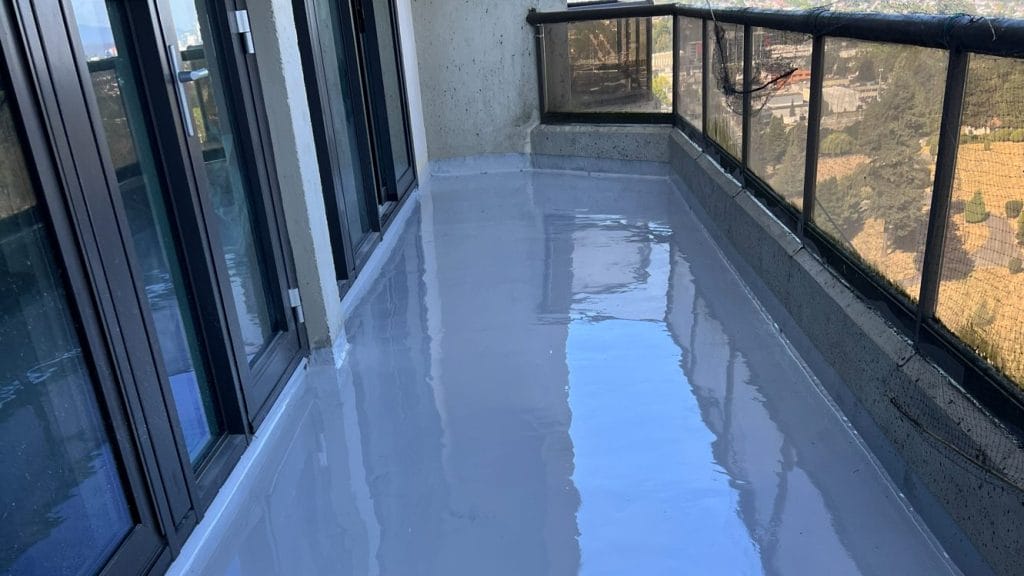
+ Balcony Waterproofing
Balconies are subject to foot traffic, structural deformation, extreme temperature swings, and the full force of Vancouver’s weather. Rather than on the deck’s flat surface, failures usually happen at intricate detailing spots.
- Railing Penetrations: If fasteners are not correctly booted and sealed, they can allow water to enter the slab.
- Door Thresholds: To stop wind-driven rain from backing up into residential suites, the transition between the outer deck and inside floor requires exact flashing details.
- The Heel Bead: To manage structural shifting, reinforced flashing must be used to detail the vertical-to-horizontal transition where the balcony floor meets the outer building wall.
+ Parkade Waterproofing
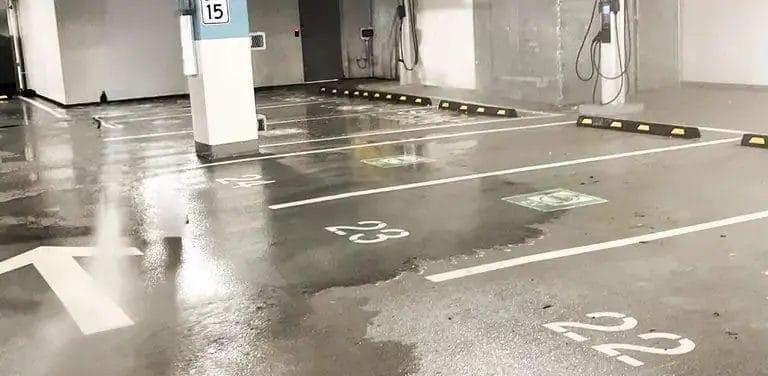
Parkades are extremely demanding settings. Every week, thousands of cars drive over the slabs, putting them under mechanical stress in addition to environmental wetness. In the winter, cars carry de-icing agents and road salt onto the decks. This salt-laden water seeps into the concrete if the parkade membrane is worn, broken, or absent, hastening structural spalling and rebar corrosion. Multi-layer traffic toppings that seal cracks, bridge dynamic movement, and withstand oil, gasoline, and vehicular fluids are used in effective parkade waterproofing.
Membrane Systems Waterproofing
The substrate material (concrete vs. wood-frame), anticipated wear, and architectural design all play a significant role in the membrane system selection. There isn’t a product that works in every situation.
+ Liquid Polyurethane Membranes
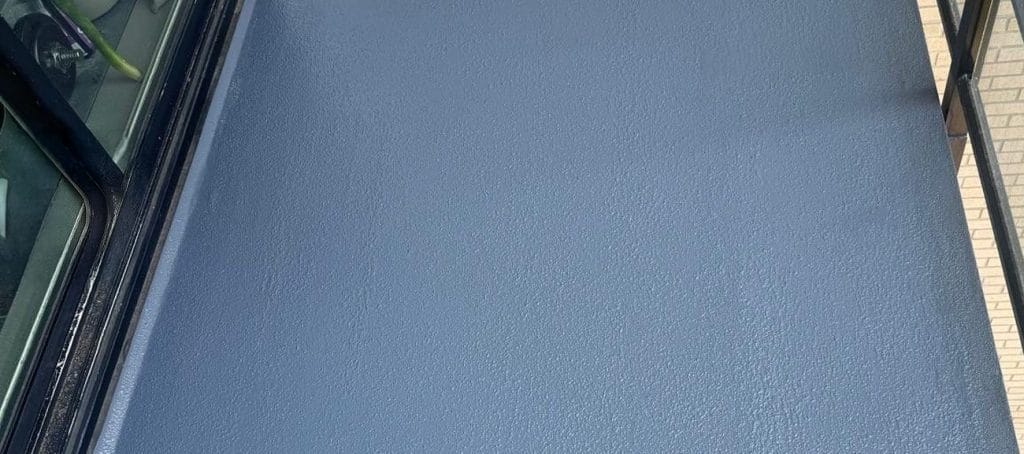
Liquid polyurethane is widely used on balconies, pedestrian walkways, and podium decks. It is applied as a liquid and solidifies as an elastomeric barrier that is rubberized and seamless. It eliminates the seams that are the weakest spots in sheet goods because it is fluid-applied and easily conforms to intricate geometries, pipes, and drains.
+ PUMA and PMMA Systems
Polyurethane Methyl Methacrylate (PUMA) and Polymethyl Methacrylate (PMMA) are advanced, fast-curing cold-liquid systems. They cure entirely in a matter of hours as opposed to days, while having a greater initial material cost. This makes them perfect for residential strata parkades, busy retail ramps, and high-traffic business parkades where it is logistically impractical to close access for a long time. They offer remarkable durability and impact resistance.
+ Torch-on Bitumen Systems
Torch-on bitumen, which is frequently used on podium decks and flat or low-sloped business roofs, is made up of several layers of SBS-modified asphalt sheets that are fused together using an open flame. It produces a strong, durable, and UV-resistant weather barrier. Strict hot-work safety permits, qualified experts, and specific fire watch procedures are all necessary for installation.
+ Membrane Systems Performance Comparison
| System Type | Primary Applications | Expected Lifespan | Key Advantage | Limitations |
| Liquid Polyurethane | Balconies, walkways, and podiums | 10 to 15 years | Seamless, excellent detailing, flexibility | Requires precise weather windows to cure |
| PUMA / PMMA | High-traffic parkades, transit ramps | 20+ years | Full cure within hours, ultra-durable | Higher upfront material cost |
| Torch-on Bitumen | Flat roofs, large concrete podiums | 15 to 20 years | Puncture-resistant, heavy-duty shield | Requires open flame and hot-work permits |
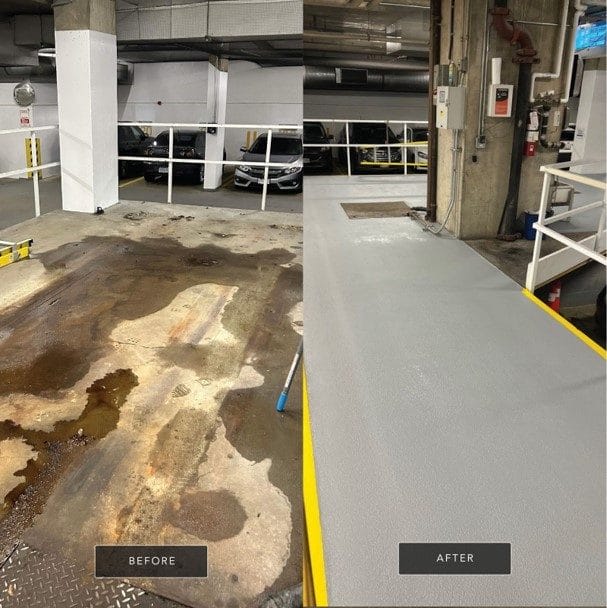
Specialty Coatings Repair
Standard membranes must be complemented with specialized coating technologies when water has already penetrated the building envelope or when certain architectural surfaces need focused protection.
+ Caulking and Sealant Waterproofing
The unsung heroes of the building exterior are sealants. They are designed to bridge the purposeful spaces between various architectural elements, including expansion joints, concrete control joints, and window-to-wall transitions.
- Expansion Joints: These deep splits allow separate sections of a building to move independently during seismic shifts or thermal expansion. They require specialized, highly flexible joint systems to remain watertight while expanding and contracting.
- Control Joints: Intentional cuts made in concrete to control where the slab cracks. To prevent water from filtering downward, these need to be sealed with polyurethane or polyurea sealants.
- Window Perimeters: High-performance silicone or polyurethane caulking prevents drafts and wind-driven water from destroying interior framing.
Sealants typically last five to ten years since they deteriorate when exposed to UV light and the elements. Any property management maintenance schedule must include routine replacement.
+ Epoxy Floors Waterproofing
Epoxy flooring offers a wearing surface and an impenetrable waterproofing barrier for interior spaces that are subject to frequent wash-downs, chemical spills, or heavy foot activity. Epoxy systems are frequently used in public hallways, commercial kitchens, waste enclosures, and mechanical rooms to completely encapsulate the concrete. Epoxy prevents interior spills and damaged pipes from leaking into the spaces below by forming a continuous, non-porous floor-to-wall cove base.
+ Concrete Injections Waterproofing
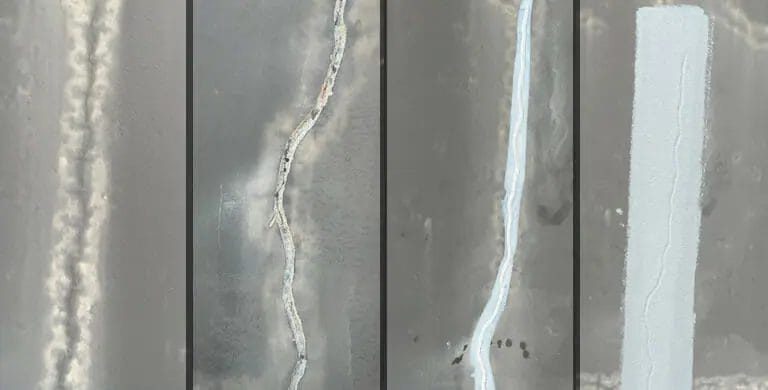
An outside membrane cannot be applied without costly excavation when water is actively seeping through a subterranean concrete wall or parkade foundation slab. This issue is resolved with concrete injection waterproofing. In order to infuse specialist materials under high pressure, technicians drill ports straight into the crack’s course.
- Polyurethane Chemical Grouts: These quickly expand into a dense, flexible foam that swiftly chokes down the leak as they react with the incoming water.
- Epoxies: Used when the crack compromises building integrity. The damaged slab is repaired by the epoxy, which cures more firmly than the original concrete.
Specialty Coatings for Commercial and Residential Projects
Exterior vertical masonry and stucco are treated with specialized elastomeric wall coatings and breathable water repellents in addition to standard paints. Elastomeric coatings can be up to ten times thicker than store-bought paint. As they open and shut, they continue to be incredibly flexible, filling in gaps and extending across hairlines to keep moisture out of the building shell while safely allowing internal vapor to escape.
+ Technical Performance Breakdown
Understanding the long-term performance of these fundamental waterproofing techniques helps building owners and strata councils assess choices during a capital planning cycle.
+ Liquid Polyurethane Longevity
Balconies and pedestrian decks are the main applications for liquid polyurethane. It usually takes 24 to 48 hours to cure and has an anticipated lifespan of 10 to 15 years. This system’s flawless detailing around intricate posts and drains is its main operational advantage.
+ PUMA and PMMA Efficiency
PMMA and PUMA systems are made for high-traffic areas and parkade ramps. They cure incredibly quickly—in just one to three hours—and have an amazing lifespan of twenty or more years. Facility downtime is greatly reduced by this quick cure time.
+ Torch-on Bitumen Durability
With an anticipated lifespan of 15 to 20 years, torch-on bitumen is the typical option for podiums and flat roofs. It offers durable construction with superior puncture resistance and cures instantly upon cooling.
+ High-Movement Sealants
For roughly five to ten years, high-movement sealants safeguard expansion and control joints. To repair and absorb seismic action without tearing, they need a whole day.
+ Polyurethane Injection Speed
If left undisturbed, polyurethane injection treats active below-grade foundation cracks and offers a long-term solution. It eliminates the need for costly excavation by stopping live water intrusion in a matter of minutes.
+ Elastomeric Coatings
Stucco is protected for eight to twelve years by elastomeric coatings. They are excellent in bridging moving hairline fractures on vertical walls and heal in 4 to 12 hours.
+ Operational Performance Matrix
| Waterproofing Strategy | Curing / Set Time | Movement Allowance | Primary Operational Target |
| High-Movement Sealants | 24 hours | High (Seismic & thermal expansion) | Expansion & control joints |
| Polyurethane Injection | Minutes | Low (Rigid foam seal) | Active below-grade foundation leaks |
| Elastomeric Coatings | 4 to 12 hours | Medium (Bridges’ hairline settling) | Exterior vertical stucco & masonry |
The Professional Leak Detection Process
It takes a lot of discipline to pinpoint the precise location of an active leak in a multi-story building envelope. Water rarely moves in a straight line; a leak that appears in the ceiling of the third level could be the result of a ruptured membrane on one side of the structure or a failing window seal on the fifth story. Before creating a scope of work, a professional site assessment is always required.
+ Phase 1: Site Evaluation and Investigation
Contractors determine the precise state of the substrate materials and evaluate the overall surface area. It is crucial for property managers to understand that unless the outdated surface treatments are removed, the entire amount of the damage cannot be confirmed.
- Visual Inspection and Thermal Imaging: Using infrared cameras to detect patterns of rust staining, thermal anomalies, and efflorescence (white, chalky mineral deposits left by moving water).
- Electronic Moisture Mapping: Determining the limits of retained water beneath roofing or balcony membranes using non-destructive moisture meters.
- Invasive and Exploratory Openings: To examine the underlying plywood sheathing or concrete, carefully remove isolated portions of cladding, stucco, or old membranes.
+ Phase 2: Defining the Scope of Work
Budget creep during execution is avoided with a clearly defined scope of work. The scope must specify exactly what is and is not included, such as removing privacy screens installed by individual residents or stripping the balcony surface down to the concrete. This clarity guarantees that competing tenders are assessed precisely, on an equal footing, and enables Strata Councils to vote on unambiguous resolutions.
Request a Free Consultation
Budgeting for Waterproofing: Price Per Square Foot
These approximate budget guidelines represent the current market pricing in British Columbia for expert membrane and waterproofing renewal, even though each business building and residential strata complex has different access issues.
+ Balcony Membranes ($20 to $40 per sq ft)
Because repair personnel must set up, detail, and seal dozens of small, isolated surfaces rather than working over a single wide-open expanse, a high unit count greatly increases labor hours.
+ Podium Decks ($25 to $40 per sq ft)
Architectural planters, landscaping over inhabited parkades, and the removal and reinstallation of large concrete pavers are just a few examples of the great intricacy involved in these projects.
+ Parkade Traffic Membranes ($35 to $50 per sq ft)
In order to preserve resident parking access, this investment reflects the need for industrial-grade, multi-coat traffic toppers, substantial mechanical surface grinding, and intricate multi-phase traffic management planning.
Note: Membrane application and preparation work are the primary focus of these baseline budget estimates.
+ Budget Planning Guide by Area
| Project Area | Estimated Cost Range | Primary Cost Drivers | What is Typically Excluded |
| Balconies | $20 to $40 / sq ft | Number of individual units, perimeter details | Resident-installed privacy screens |
| Podium Decks | $25 to $40 / sq ft | Paver removal, integrated planter boxes | Extensive slab leveling |
| Parkade Decks | $35 to $50 / sq ft | Surface preparation, grinding, and traffic phasing | Deep concrete rebar replacement |
Commercial Waterproofing Checklist
Use this scannable checklist at various phases of the project to ensure both WorkSafeBC compliance and application quality.
| Phase | Task Item | Description | |
| Phase 1: Pre-Mobilization & Safety Setup | Phase 1 | WorkSafeBC Clearance | Obtain a valid clearance letter from the Prime Contractor. |
| Phase 1 | Notice of Project | Filed with WorkSafeBC (if applicable). | |
| Phase 1 | First Aid | Designated First Aid attendant on-site with an updated first aid kit matching the crew size and risk level. | |
| Phase 1 | Hazard Assessment | Field Risk Assessment (FLRA) is completed and signed by all crew members daily. | |
| Phase 1 | Ventilation Plan | Mechanical air extractors/blowers staged for indoor parkade or below-grade applications. | |
| Phase 1 | Fire Safety | Minimum 20-lb ABC fire extinguishers stationed within 3 meters of any hot-applied/torch-on waterproofing activities. | |
| Phase 2: Substrate Inspection & Preparation | Phase 2 | Moisture Testing | Perform a plastic sheet test (ASTM D4263) or use a moisture meter. Ensure concrete moisture is within manufacturer specs (usually < 4%). |
| Phase 2 | Surface Profile | Verify concrete surface profile (CSP) matches specifications (typically CSP 3–5 for fluid-applied membranes via shot-blasting or grinding). | |
| Phase 2 | Defect Repair | Honeycombs, bug holes, and cracks > 1.6 mm (1/16 in) routed out and patched with repair mortar. | |
| Phase 2 | Detailing | Apply termination bars, cant strips at 90-degree wall-to-footing transitions, and detail cracks with detail-grade sealant. | |
| Phase 3: Application & Quality Control (QC) | Phase 3 | Ambient Conditions | Check and log ambient temperature, surface temperature, and relative humidity. Ensure the surface temperature is at least 3°C above the dew point. |
| Phase 3 | Mixing | Ensure 2-component materials are mixed using a mechanical mixer at the exact RPM and duration specified by the manufacturer. | |
| Phase 3 | Wet Film Thickness (WFT) | Use a notch gauge frequently during application to ensure uniform millage (e.g., 60 mils WFT). | |
| Phase 3 | Curing | Protect the applied membrane from rain, freezing temperatures, and foot traffic during the designated cure window. | |
| Phase 4: Testing & Backfill Protection | Phase 4 | Flood Testing | (For horizontal decks/podiums) Plug drains and flood the area with 50 mm (2 inches) of water for 24 to 48 hours to inspect for leaks. |
| Phase 4 | Electronic Leak Detection (ELD) | Conduct high or low-voltage vector mapping if required by specification. | |
| Phase 4 | Protection Board | Install specialized drainage matting or protection board immediately following a successful test to prevent damage from subsequent trades. | |
| Phase 4 | Inspection Sign-Off | Complete and sign the manufacturer’s warranty verification checklist before backfilling. |
Selecting a Qualified Restoration Contractor
The lowest bid should never be the only consideration when selecting a restoration partner. Low-ball estimates frequently reveal ambiguous scope definitions, missing line items, or a desire to save on environmental compliance and safety procedures.
+ The Six-Point Safety Checklist
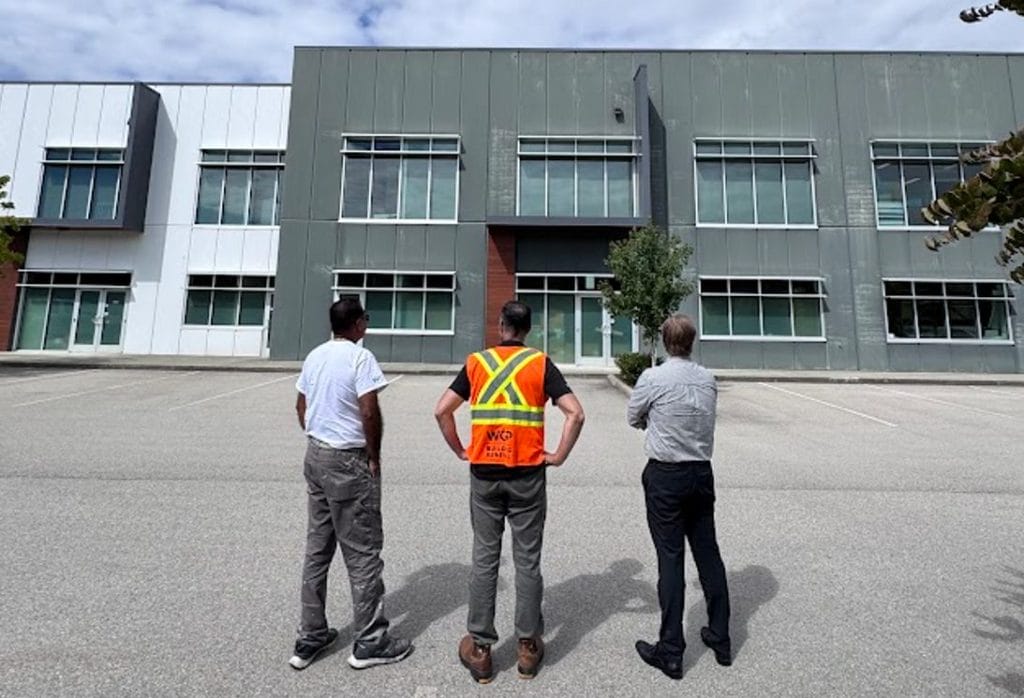
Make sure the building renewal contractor you have selected satisfies these thorough safety and operational requirements before signing any large capital project contract:
- WorkSafeBC Status: The contractor must be actively in good standing. Property managers should obtain a current clearance letter directly from the WorkSafeBC portal to verify that there are no overdue accounts or outstanding safety stop-work orders.
- Commercial Liability Insurance: The company must have comprehensive liability coverage, generally ranging from $2 million to $10 million, with a policy endorsement that allows for work at height. Confirm that your specific strata corporation or corporate entity is named as additionally insured on the certificate.
- Corporate Safety Manual: Reputable contractors are expected to have a current, audited health and safety manual detailing company-wide procedures for all high-risk construction activities.
- Trade Certifications: All personnel working on swing stages, scaffolding, or rope access systems must possess valid, accredited fall protection and aerial lift operation certifications.
- Personal Protective Equipment (PPE) Standards: Hard hats, high-visibility vests, safety glasses, and steel-toed boots are required for all employees, subcontractors, and visitors within the active construction zone.
- Daily Site Hazard Assessments: The site supervisor is responsible for conducting documented morning safety briefings to assess evolving site conditions, including strong winds, slippery surfaces due to rain, and particular building access hazards.
+ Transparency and Long-Term Support
A reliable building restoration expert ensures clear communication from start to finish, providing a complete closeout package once the project is done. This package should contain official completion certificates, manufacturer data sheets for all materials used, and a straightforward maintenance guide. This guide will explain how to inspect and care for your new waterproofing systems, helping them last for their intended engineered lifespan.
The WCP Difference and Warranty Solution
For Strata Councils, Property Managers, and Building Owners throughout the Vancouver Mainland, collaborating with a dedicated building renewal contractor ensures complete peace of mind while safeguarding the long-term value of your property. We recognize the unique challenges posed by our local climate and the complexities involved in undertaking significant restoration projects on occupied residential and commercial buildings.
Our expertise in waterproofing, concrete repair, and building envelope renewal is supported by our industry-leading PROTECH Warranty & Maintenance Program, a comprehensive assurance plan that includes:
- 1. A Five-Year Warranty on Labour & Materials
- 2. A Complimentary Building Inspection 24 Months After Project Completion
- 3. A Certificate of Completion and Records Package
- 4. An Easy-to-Understand Maintenance Manual
Frequently Asked Questions
1. Can minor balcony membrane leaks be patched, or is a full replacement always required?
Slight localized punctures or obvious damage from impacts can typically be fixed with suitable liquid-applied patch materials. However, if water has infiltrated beneath the membrane or if the coating is approaching the end of its effective lifespan, localized repairs may prove ineffective. Water will persist in moving underneath the detached system, resulting in extensive concrete spalling and wood decay. Although localized repairs may have lower initial expenses, complete membrane replacement provides superior long-term value due to economies of scale.
2. How do seasonal weather variations affect the application of waterproofing membranes?
Liquid-applied systems are affected by substrate moisture levels and ambient temperature at the time of installation. When coatings are applied to wet concrete, moisture can become trapped within the substrate, leading to the formation of air bubbles and resulting in the coating detaching from the surface. Standard polyurethane applications necessitate dry conditions and low humidity. If work is required during the often damp winter months, technicians need to construct fully enclosed hoarding and utilize temporary heating units to ensure that surfaces remain dry and meet specified requirements. PUMA or PMMA systems are favored for cold-weather applications owing to their quick-curing properties.
3. Why are silicone sealants generally avoided in building envelope restoration projects?
Silicone sealants offer considerable flexibility; however, they present notable difficulties for ongoing building maintenance. The majority of paints are unable to bond to silicone surfaces, which undermines the aesthetic appeal of the building’s exterior. Furthermore, cured silicone residues inhibit the bonding of new sealants or coatings to the substrate. Unless explicitly mandated by a structural engineer, high-performance polyurethane sealants are favored for exterior restoration projects, owing to their superior adhesion and compatibility with paint.
4. How can a strata council determine if an interior leak is caused by a membrane failure or a plumbing issue?
Technicians utilize non-destructive testing methods to identify the source of the issue. When a leak continues at a consistent flow rate, regardless of local precipitation or weather changes, it often suggests a failure in a pressurized plumbing system. Conversely, if the internal moisture fluctuates with rain driven by the wind or the use of an outdoor pool, it usually signifies a compromise in the building’s membrane or joint sealant. To verify the leak’s pathway, technicians employ thermal imaging cameras and chemical dye tracers.
5. What is the difference between cosmetic painting and a waterproof coating for an exterior wall?
Standard exterior cosmetic paint is intended to enhance the visual appeal of a structure, offering only limited protection against moisture penetration. It creates a thin layer that can readily break if small hairline fractures appear in the underlying stucco or concrete.
In comparison, an exterior waterproof elastomeric coating is engineered to be much thicker and more resilient. It possesses excellent elongation characteristics, enabling it to stretch over widening cracks without fracturing, while still being breathable to permit the safe escape of internal water vapor from the building’s envelope.
6. How can a strata council determine if a leak is coming from a failed window sealant or a membrane issue?
Identifying the precise route of water infiltration necessitates a thorough evaluation of the building envelope by a professional. Since moisture can navigate considerable distances within wall cavities, non-invasive leak detection technologies such as infrared thermography, electronic moisture mapping, and calibrated water spray testing are employed. These methods allow for the tracing of the moisture source back to its origin without the need for destructive removal of interior drywall or exterior cladding.
7. What causes “re-emulsification” in below-grade waterproofing, and how is it avoided?
Re-emulsification takes place when a liquid-applied waterproofing coating sets but later degrades, returning to a liquid form due to extended, consistent immersion in water. This issue frequently arises with inexpensive, polymer-modified asphalt emulsions that are not specifically designed to withstand hydrostatic pressure.

Protect Your Investment with Professional Project Management
Waterproofing repairs and structural leak detection are complex tasks that require extensive technical expertise, careful trade sequencing, and strict adherence to provincial safety regulations. Choosing an experienced partner ensures your property receives long-term protection without unexpected budget overruns.
Our team specializes in efficient project management that minimizes disruptions to tenants. You can always reach out to us at [email protected] or contact us by phone at 604.420.5552