Major building repair, restoration and capital improvement projects are all significant investments in terms of time, effort and money for property owners and strata councils. While selecting and hiring a qualified contractor is the essential first step, it’s equally as important to consider that the lowest bid doesn’t always represent the best long-term value.
Unforeseen challenges, changing project requirements and the ability of everyone involved to work collaboratively can all have a considerable impact on a project’s success.
In WCP Building Renewal’s Building Better podcast series, host Steven Bailey sits down with professionals from across the property management, construction and real estate industries to explore the challenges, opportunities and insights shaping their work.
In this episode, Steven speaks with Spencer Rocky, President of CNC Property Group, about the nuances and complexities of contractor selection, the importance of trust and communication, and why building solid working relationships can be just as valuable as the technical expertise behind a project.
Hear the full conversation with Spencer Rocky — watch Episode 2 of Building Better on YouTube.
Spencer Rocky’s strategic perspective on property management
As President of CNC Property Group, Spencer Rocky brings a broad perspective to the challenges of property management, business operations and capital project planning. His professional background spans management consulting, business acquisition and operational leadership, combining strategic decision-making with hands-on experience in the property management industry.
Since acquiring CNC Property Group with his partners, Spencer has focused on strengthening the company’s operations and delivering a more personalized approach to property management. He sees the business as occupying a valuable middle ground, where they are large enough to offer comprehensive services, but small enough to maintain close relationships with their clients.
For Spencer, successful property management comes down to more than technical expertise and efficient operations. It’s about assembling the right people, establishing clear expectations and building the trust needed to navigate challenges together.
The importance of collaboration in capital projects
Major capital improvement or renewal projects involve numerous stakeholders—from the property owners and strata councils, to property managers, engineers and contractors. Each facet of this often complicated dynamic brings a different set of concerns, responsibilities, skills and priorities to the table. Keeping everyone aligned around the common objectives of the project is essential to its success.
As Steven and Spencer discuss in episode 2, even the most carefully planned building renewal projects are bound to experience unexpected challenges. Unforeseen site conditions, scheduling complications, tenant concerns and changes to the scope of the project can all create friction amongst the parties involved, especially if responsibilities have not been clearly defined or communication breaks down.
For property managers tasked with overseeing complex building restoration and capital improvement projects, setting clear expectations, open communication and a willingness to address challenges together can help maintain momentum, reduce unnecessary disputes and keep projects moving toward a successful outcome.
Building Better: Ep5 – Part 2 – Proactive Maintenance: Stay Ahead of Costly Building Problems

Looking beyond the lowest bid: Choosing the right contractor
When considering different contractors, be it scheduled maintenance, emergency repairs or for a major building renewal or capital improvement project – price is inevitably going to be an important factor in the consideration. Property managers, strata councils and building owners all have a responsibility to manage budgets carefully and ensure that they’re making sound financial decisions. However, making a selection based on the lowest construction bid doesn’t always lead to the best project outcome.
Spencer explains the true value of a contractor extends beyond the initial quote. Their experience, technical capabilities, relationships in the industry and willingness to work collaboratively all play an important role in how a project comes together, especially when unforeseen challenges arise. Anyone who’s been involved with planning a renewal, or capital improvement project knows that preparing for what could go wrong is often as important as planning for everything to go as planned.
Even when multiple contractors are bidding on the same project specifications, their approaches to managing risk, interpreting requirements and addressing unexpected conditions can vary considerably. A lower initial price may appear attractive, but disputes over scope, additional charges or project delays can quickly affect the overall cost and experience.
For property managers and strata councils, making an informed selection of contractors means looking at the complete picture. Beyond comparing prices, it’s important to consider a contractor’s qualifications, track record, references, and their ability to navigate challenges constructively. Ultimately, the goal is to choose a reliable project partner who can deliver quality work while respecting and honouring your budget for the project.
Understanding engineering specifications and construction bids
When it comes to a major building repair or capital investment project, engineers will usually prepare a package containing detailed specifications outlining the scope of work, technical requirements, specified materials, and construction methods. These documents actually form the foundation of the bidding process, helping contractors fully understand the scope of the project, what is expected from them, and allowing property owners and managers to accurately compare proposals against a common set of requirements.
As Spencer points out, even when contractors are working from the same set of detailed specifications, their bids aren’t necessarily created equal. Each contractor may interpret certain requirements differently, assess potential risks differently, or make their own assumptions about how the work should be carried out.
And while engineering specifications are intended to provide clarity, they can’t always anticipate what might be uncovered once construction begins. Hidden deterioration, unexpected site conditions or unforeseen complications can introduce challenges that weren’t fully accounted for in the original scope of work.
This is where consideration for a potential contractor’s experience, communication skills and approach to problem-solving becomes especially important. Rather than focusing exclusively on the initial price a contractor has quoted, property managers and strata councils should consider how prospective contractors work, identify potential risks, address uncertainties and manage changes throughout the project.
Building Better: Ep5 – Part 2 – Building Proactive Maintenance -Spenser Rocky – C & C Property

On Paper vs. On Site: Understanding Construction Bids
| Project Consideration | Included in the Specifications | What Can Happen in Practice | |||
| Scope of work | Defined repairs, construction methods and materials | Contractors may interpret these requirements differently | |||
| Bid comparison | A common set of requirements for all bidders | Quotes may differ in pricing, exclusions and assumptions | |||
| Unexpected conditions | Project requirements based on known building conditions | Hidden/underestimated damage or complications may arise | |||
| Project execution | Technical standards and expected outcomes | Communication and problem-solving become essential tools | |||
| Overall project cost | A basis for contractors to estimate construction costs | Unforeseen work, delays and changes can affect final costs. |
Understanding these distinctions can help property managers and strata councils make more informed decisions when selecting a contractor, recognizing that a well-prepared bid is only one part of a successful building repair project.
Request a Free Consultation
The importance of trust when choosing a building contractor
When selecting a contractor for any major building repair or capital improvement project, their technical qualifications, competitive pricing and a proven track record are all important considerations in the process. But there’s another quality in a contractor that can be harder to measure: trust.
As Steven and Spencer discuss, the pressures and schedules of construction projects can place considerable demands on working relationships. When unexpected problems arise, property managers and building owners need to feel confident that their contractors will communicate openly, take responsibility and work collaboratively toward finding practical solutions.
Steven introduces an informal approach to evaluating these relationships, shared by WCP Building Renewal’s CEO Dave Notte, known as the “beer and barbecue test.”
The idea is simple: Would you feel comfortable sitting down for a beer and a barbecue with the people you’re considering hiring?
While it’s certainly not a formal contractor evaluation method, the question speaks to something important. Beyond technical expertise, are these people approachable and trustworthy? Do they seem willing to have honest conversations – especially when things don’t go according to plan?
For property managers and strata councils, these qualities can be particularly valuable during lengthy or complex building restoration projects. A contractor who communicates clearly, respects the concerns of stakeholders and approaches difficulties constructively can help maintain confidence and cooperation throughout the work.
The beer and barbecue test is not a substitute for checking qualifications, insurance, references or previous project experience. But it’s a reminder that successful contractor relationships depend on the people behind the proposal, not just the numbers within it.
Why is preventative maintenance important for buildings?
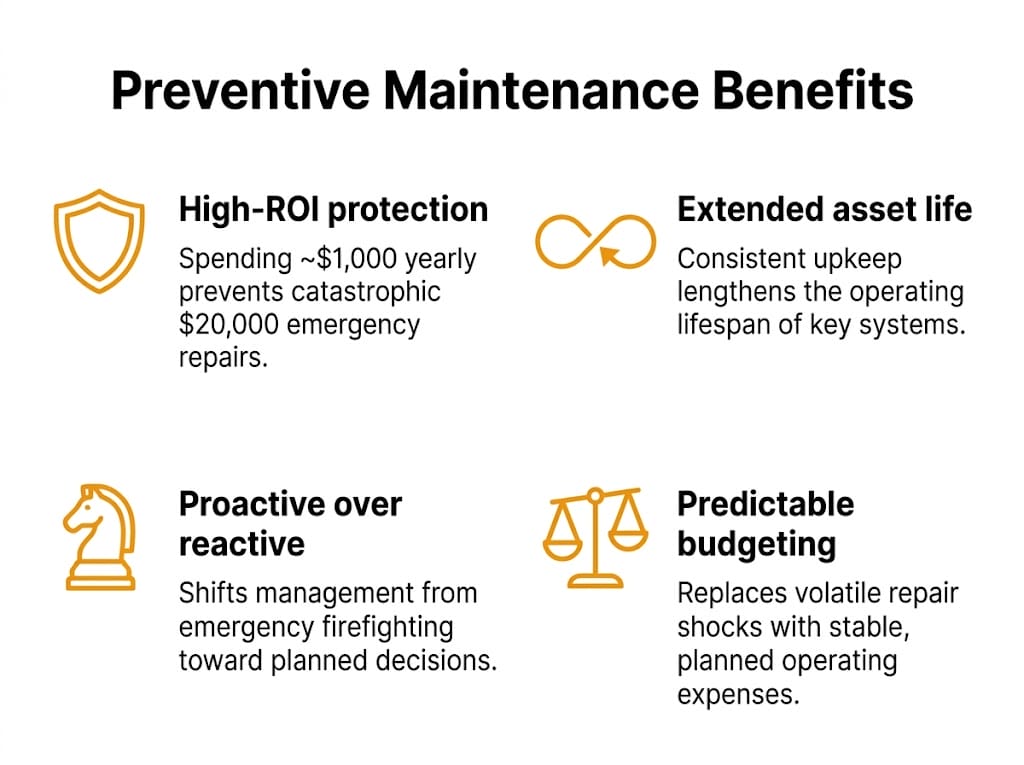
Spenser Rocky discussed that Investing in routine preventative maintenance such as spending $1,000 annually to avoid a $20,000 leak protects budgets by preventing costly emergency repairs in the future. These efforts can extending the lifespan of the building envelopes
Building partnerships that last beyond project completion
Done right, the relationship between a property owner or strata, and a building repair contractor doesn’t necessarily end when the project is complete. For property managers and building owners, establishing a strong working relationship with a reliable contractor means having an experienced professional they can turn to long after the scaffolding is down, the crews have left, and the site has returned to its regular operations.
Whether it’s a question concerning the recent work completed, warranties, building maintenance, an unexpected repair or a recommendation for another qualified trade, an established contractor can become an invaluable resource. Having someone who understands the property, its history and the work that’s been completed can save time, simplify decision-making and provide reassurance when new challenges arise.
Spencer points out that this long-term relationship becomes particularly important when it comes to warranties. Depending on the scope of work and terms, warranty coverage may extend months or even years beyond completion of the project. If deficiencies or unexpected problems arise, property managers need to know they can rely on their contractor to respond professionally and stand behind their work.
As Spencer emphasizes, the strongest long-term business relationships are built on mutual trust and a willingness to give and take.
In the end, choosing the right contractor is about more than just the successful completion of a project. It’s an opportunity to establish a lasting professional relationship built on trust, accountability and mutual respect. For property managers and strata councils, having a dependable contractor they know they can call upon can be just as valuable as the work that brought them together in the first place.
How high-trust relationships deliver better results
Throughout his experience in consulting, business operations and property management, Spencer has observed that the most productive relationships are built on mutual respect, a willingness to work together to find solutions and shared objectives.
He makes a point of cautioning against the “55/45 mentality,” a situation where one party consistently tries to gain a slight advantage or get just a little bit more than they’re willing to give. While pushing for small concessions may feel like a win in the moment, continually seeking short-term gains can undermine goodwill, create friction and weaken the relationship. Especially unfortunate in a long-term project where the expectation is that the parties will be working together for several weeks or even months.
The alternative is a balanced and fair approach where both parties recognize the value the other brings to the table, that working together effectively will always require a little bit of give and take on both sides.
Over time, these relationships often lead to better collaboration, more reliable service, repeat business and valuable professional connections.
For property managers, strata councils and building owners, the lesson is particularly relevant. Successful capital improvement projects depend on a network of professionals who can navigate challenges together, communicate openly and make decisions that are in the best interests of the project.
Building trust isn’t simply about maintaining positive working relationships. It’s about creating the conditions for better decisions, more productive partnerships and successful outcomes over the long term.
Key takeaways for property managers and strata councils for building repair
From evaluating construction bids to managing unexpected challenges and building lasting contractor relationships, our conversation with Spencer Rocky offers valuable insights for anyone responsible for overseeing building repair and capital improvement projects.
While technical expertise, budgets and detailed planning are essential, Spencer has emphasized that successful projects also depend on choosing the right people and developing relationships built on trust and collaboration.
| Project Consideration | Recommended Approach | ||||
| Selecting a contractor | Evaluate their qualifications, experience, references and reliability alongside their competitive pricing | ||||
| Construction bids and specifications | Review and clarify a contractor’s assumptions, exclusions and potential risks rather than relying solely on the initial quoted price. | ||||
| Project collaboration | Establish shared objectives, define responsibilities and ensure open communication between property managers, owners, engineers and contractors. | ||||
| Unexpected project challenges | Work with contractors who demonstrate flexibility, accountability and a willingness to resolve issues constructively. | ||||
| Contractor warranties | Understand details of warranty coverage, review terms carefully and consider a contractor’s reputation for post-project support. | ||||
| Long-term contractor relationships | Build connections with trusted professionals who can provide ongoing advice, maintenance support and other industry referrals. | ||||
| Trust and professional integrity | Prioritize fairness, mutual respect and collaborative problem-solving over short-term gains. |
Ultimately, Spencer’s insights reinforce an important principle: the success of a building repair project depends on more than completing the work on time and within budget. Choosing dependable partners who communicate openly, honour their commitments and stand behind their work can deliver lasting value for property owners and managers.
FAQs about selecting a contractor and building repair projects in BC
1. What are the most important things to consider when choosing a building repair contractor?
Construction bids are important, but property owners and managers should evaluate a contractor’s qualifications, relevant project experience, references, communication and reliability. It’s also important to understand how prospective contractors would manage unforeseen challenges, coordinate with other professionals and address warranty concerns after the project is completed.
2. Why isn’t the lowest construction bid the obvious choice?
Of course, budgets are budgets, but the lowest bidder might not be the one to deliver the best overall value to your project. Differences in contractor experience, pricing assumptions, scope exclusions and approaches to managing unexpected conditions can affect a project’s final cost and quality. Reviewing bids carefully helps property managers and strata councils make more informed contractor selection decisions.
3. Why are engineering specifications so important in the construction bidding process?
Engineering specifications are there to help establish the technical requirements, materials, scope of work and expected standards for a given construction project. They provide contractors with a common basis for preparing competitive bids. However, even detailed specifications may not anticipate every unforeseen site condition or complication that arises during construction.
4. How should property managers handle unexpected challenges during capital improvement projects?
When unforeseen conditions or complications arise on a project, effective (and constructive) communication and collaboration become essential. Property managers should work with engineers, contractors and other stakeholders to assess the situation, clarify responsibilities and agree on appropriate solutions. Documenting decisions and maintaining clear communication can help minimize disputes, and prevent delays and unnecessary costs.
5. What is the importance of contractor warranties for building repair projects?
Contractor warranties provide defined protections against certain defects or deficiencies after project completion. Coverage can vary depending on the contract, materials and type of work performed. Property managers and building owners should understand warranty terms, limitations and reporting requirements, while considering a contractor’s reliability and willingness to address post-project concerns.
6. How can maintaining strong contractor relationships benefit property managers and strata councils?
Trusted contractor relationships can improve communication, support collaborative problem-solving and provide continuity across multiple building maintenance and building repair projects. Working with reliable professionals who understand a property’s history and requirements can also make it easier to address future repairs, plan improvements and access specialized expertise.
As Steven Bailey points out, there’s something to be said for WCP’s informal “beer and barbecue test.” Beyond qualifications and experience, would you actually want to sit down and have a beer with the people you’re hiring? It’s a simple but memorable reminder that the best working relationships are built on mutual trust, respect and genuine connection.
Building Better: The value of creating strong industry partnerships
Successful building renewal projects depend on more than technical expertise, detailed planning and competitive pricing. They also require open communication, shared objectives and strong working relationships between the people responsible for getting the job done.
At WCP, we understand the importance of having the right people and partnerships in place. From major exterior restoration and waterproofing projects to ongoing building maintenance and repairs, our team works alongside property managers, strata councils and building owners to deliver practical, long-term solutions.
Stay tuned for more Building Better conversations with the industry professionals who are helping shape the future of property management and building repair across BC and beyond.
Have a building renewal project in mind?
Connect with WCP Building Renewal at [email protected] or 604-420-5552 to discuss your property’s needs.