From timelines to the types of membrane, here’s what you need to know to help you better estimate the price per square foot for waterproof membrane work in your building. Replacing or repairing a waterproofing membrane is probably one of the least exciting topics that could come up at a strata council meeting or when reviewing a building depreciation report. But maintaining, repairing, or replacing your building’s waterproofing membrane can save you hundreds of thousands of dollars down the road. (Not to mention the headaches). Determining the cost per square foot for replacing a waterproofing membrane depends on a variety of factors, which we will examine to help you better understand the process and confidently plan your budget.
The right waterproofing membrane for the job
A dependable waterproofing membrane is a critical part of protecting a structure from water intrusion and damage, including mould and concrete spalling. The type of membrane used in a specific application will be determined by where on the building it is being installed. Rooftops, parkades, and below-grade applications all require different approaches to keeping water out.
Rooftops
Torch-on bitumen, or liquid applied membranes, are common on the flat or low-sloped roofs of commercial, warehouse, high-rise, and low-rise residential buildings. While each has its advantages in specific situations, both are durable, UV-resistant, and create a dependable weather barrier.
Decks and balconies
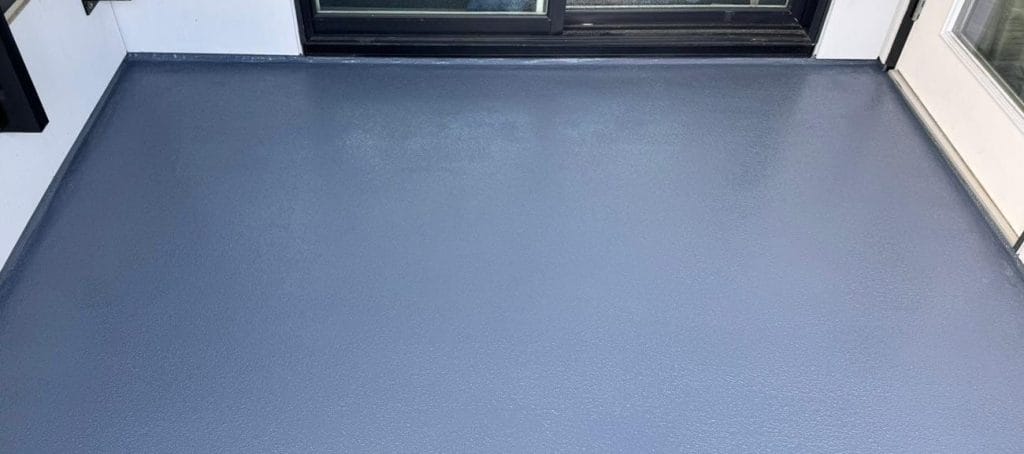
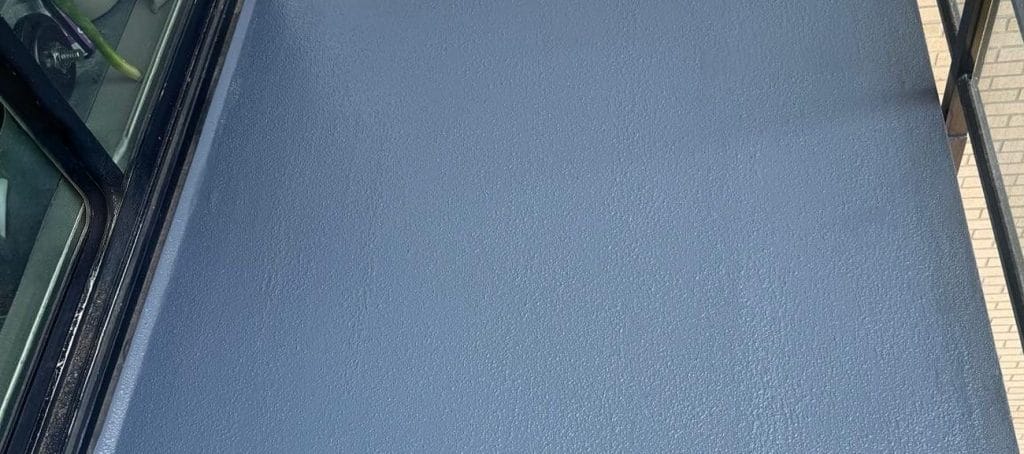
Where structural integrity is a must, and aesthetics are more important (than a rooftop, for instance), a liquid applied polyurethane membrane is often used, offering seamless coverage, flexibility, enhanced safety through slip-resistant finishes, and can be topped off with textured or decorative finishes.
Parkades
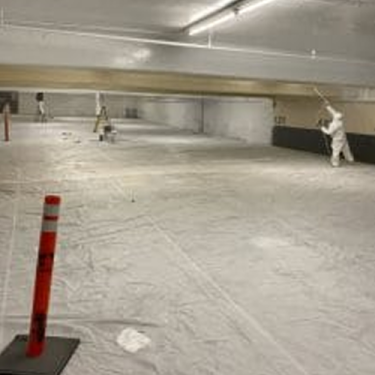
Here, durability and safety are usually the most important factors in choosing a waterproofing system. For pedestrian surfaces, a pre-mixed one-part polyurethane membrane is often sufficient. For areas that see vehicular traffic like ramps, driveways, and parking stalls, a two-part polyurethane is the go-to for durability under tire traffic, flexibility under mechanical stress, and its non-slip qualities.
Other high-performance options are PMMA and Puma membranes, which are high-performance, liquid-applied systems made from specific types of fast-curing resins. Both are recognized for their fast curing speeds, flexibility, and long-term durability.
Foundation walls
Without proper waterproofing, moisture from rain or groundwater can seep through cracks or voids, causing significant damage like mould growth, interior water damage, and even structural damage. To protect a building below grade, a spray-applied rubberized coating, sheet membranes, and/or cementitious coatings are used to provide a durable and dependable barrier against ingress.
Exposure to weather, foot traffic, structural movement, and more are all factors in determining the best product for the job. When it comes to determining the cost per square foot, the type of membrane used is just a piece of the puzzle.
On-site factors that affect the cost of membrane work
As you see, there’s really no one-size-fits-all answer to accurately estimate the cost per square foot for waterproofing membrane repairs or replacement. Let’s look at some common important factors we use to best estimate a final price for your building’s requirements.
Site evaluation and scope definition
One of the first steps we take in the estimating process is a thorough site evaluation. Considerations include the size of the project, the height of the building, access issues, and timelines are all taken into consideration.
Surface conditions
Depending on the condition of the existing waterproofing system, repairs may be necessary, including concrete repairs, sealing of cracks, patching, and removal of old coatings.
Membrane type required
While the goal is always to prevent water ingress, each membrane system comes with its own unique installation methods, challenges, and costs. For example, liquid polyurethane membranes are common on high-rise and mid-rise balconies. Ideal for their flexibility and seamless coverage, but may require added surface prep or reinforcement in high-traffic areas.
PMMA and PUMA systems are also popular options for high-traffic or time-sensitive applications like parkades, balconies and podiums. They both offer fast curing times, excellent durability, and flexibility.
Torch-on systems, often used on larger deck surfaces, come with added safety protocols, require trained installers and specialized equipment – all of which can increase labour and staging costs.
Equipment planning and access
The height of the building or affected areas, clearance, and location logistics can all affect pricing. For instance, scaffolding, swing stages, or rope access may be required to reach high-rise balconies, each with its own setup and safety considerations, and equipment costs. In underground floors and parkades, traffic control personnel may be needed to ensure safety and maintain access. Each of these examples can mean extended timelines and drive up overall costs.
Project scale
Larger or more complex projects often mean longer timelines, more equipment, and greater coordination. This and any of the factors listed above will have a significant effect on the price per foot of waterproofing.
Disposal
An often overlooked, but important cost that should be factored into your budget is waste disposal. When a full membrane replacement is required, the cost of disposal can be a significant factor, especially if the replacement includes damaged concrete and substrate materials.
Warranties and long-term performance
Different membrane systems will offer warranties of 10, 15, or even 20 years. While investing in a high-quality system with a robust warranty might mean higher upfront costs, you’re likely to run into fewer repairs and replacements down the road.
Our proven process means reliable results
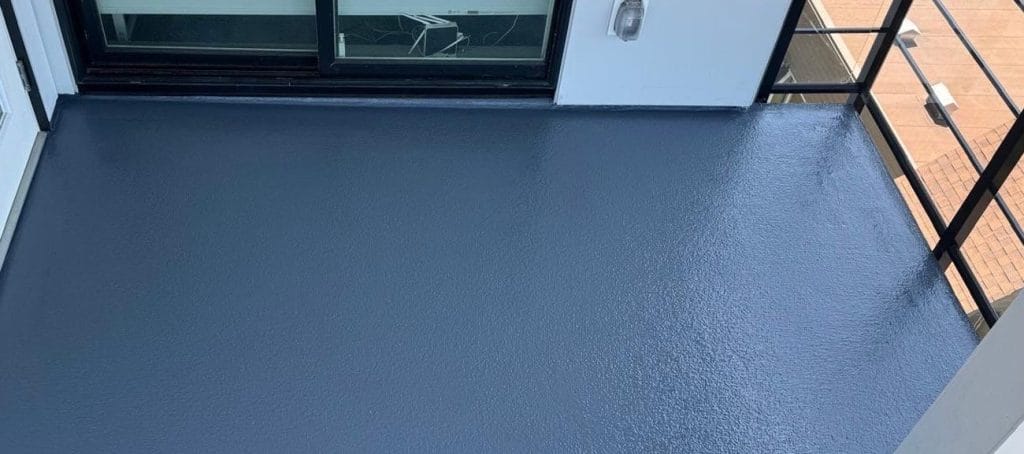
An example of how we approach the removal and replacement of a liquid-applied deck membrane on a townhouse or mid-rise building.
1. Access
One of the first things we’ll determine is access. Depending on the size and scale of the project, it may include ladders, scaffolding, boom lifts, rope access, or even access through individual units.
2. Site prep & protection
Before any work begins, we properly prepare the area. This includes removing planters, furniture, and fixtures to create a clean and accessible workspace. We carefully protect surrounding areas like siding, doors, and landscaping from damage during demolition.
3. Remove the existing membrane
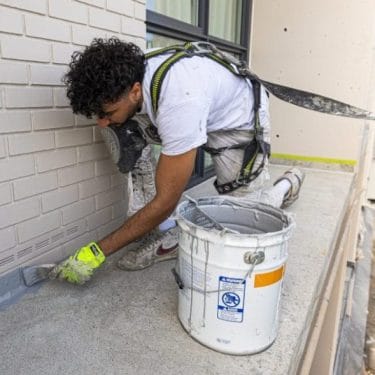
The old membrane is carefully removed using grinders, scrapers, etc, ensuring that all loose, peeling, or delaminated material is completely removed.
Then the entire area is then power washed to remove all dust and debris, followed by an application of Xylene to ensure a surface clean of all contaminants.
4. Surface repairs and prep
With the old membrane removed, we carefully inspect the substrate for any damage.
Repairs can range from minor issues like fixing plywood seams to more extensive work like concrete spalling. For wood substrates, joints, corners, and transitions are reinforced with mesh or fabric for added durability if needed. Of course, these repairs are a major factor in cost per square foot, but they often can’t be fully assessed until the original membrane has been removed.
We then ensure the surface is clean and dry, and properly sloped for drainage. If all is in good order, we can then apply a coat of primer (if required) and “heal beads” of urethane sealant where vertical and horizontal surfaces meet to ensure a watertight finish.
5. Applying the new membrane system
With everything prepped, it’s time to install the new liquid membrane. Depending on the manufacturer’s specs, this is often done in multiple coats with dry times to consider between each coat.
Special care is taken around drains, thresholds, and wall connections to prevent leaks.
For pedestrian areas, sand is broadcast into the final coat for a safe, slip-resistant surface.
6. Curing & inspection
Now that the membrane has been applied, it needs time to fully cure to ensure long-term durability and performance. Once cured, we carefully perform a thorough visual inspection and may perform a water test to confirm everything is sealed tight.
We don’t walk away until everything passes the final check.
Breaking it down. Waterproofing your building from top to bottom
When it comes down to repairing or replacing membranes in Vancouver, each structure and situation is unique. From rooftops to basement parkades, let’s look at key cost factors for a typical membrane replacement in the most common areas of a building.
While patch repairing troubled spots can typically appear more affordable upfront, the setup, labour, and material minimums mean the cost per square foot may be significantly higher. On the other hand, full removal and replacement usually benefits greatly from economies of scale, resulting in a significantly lower cost per square foot.
*It’s important to note that these prices are general and don’t account for major restoration work to the underlying wood or concrete substrate.
Rooftops
- $15 – $25 per square foot. Most common factors affecting price:
- Access: Crane or scissor lifts, ladders, stairwells, and freight elevators all affect setup time and labour.
- Penetrations: Vents, HVAC units, skylights, doorways, and rooftop equipment require detailed work.
- Membrane type: A torch-on, fully-adhered system versus a mechanically fastened system will have significantly different costs and labour requirements.
- Wind and weather: Working on the roof of a high-rise or coastal buildings may require extra detailing and anchoring.
- Warranty Details: Longer-term warranties often require specific products and installation protocols.
Balcony Membranes
- $20 – $40 per square foot. Most common factors affecting price:
- Unit count: Many small balconies (as on a residential high rise require more labour per square foot than one large surface.
- Access: Timing and the ability to access individual units, swing stages, or rope access may be needed.
- Surface Condition: Damaged or aging substrates may require concrete repairs, rot repair, or patching.
- Details: Door thresholds, windows, and railing penetrations can be complex and time-consuming.
- Membrane type: High foot traffic-rated membranes with added durability and flexibility or decorative finishes may cost more.
Podium decks
- $25 – $40 per square foot. Most common factors affecting price:
- Surface area: Large surfaces may include many details like planters, drains, or expansion joints.
- Access: Scissor lifts, scaffolding, or hoarding may be required.
- Drainage and slope: Poor slope or drainage may require corrective work to improve water displacement.
- Membrane type: These spaces often utilize multi-layer systems with protection boards and pavers, which need to be removed and replaced after the new membrane has cured. Opting for higher-performance membrane types may also increase cost and complexity.
Parkade membranes
- $35 – $50 per square foot. Most common factors affecting price:
- Traffic load: Heavy vehicle traffic requires a highly durable, traffic-rated membrane system.
- Surface condition: Contamination from oil, salt exposure, cracking, and water ingress can often require significant preparation and repair.
- Slope and drainage: Assessments, corrections, and repairs here are critical to avoid pooling water or damage due to freeze-thaw cycles.
- Ventilation: Tight or enclosed spaces with limited access to ample fresh air may require ventilation or confined space protocols.
- Membrane type: In large-scale applications like parkades, the type of membrane chosen will have a major role in the overall cost. For instance, PMMA or PUMA systems, though highly recognized for durability, tend to be significantly more expensive than a liquid polyurethane membrane.
- Access and phasing: If it’s an active parkade, the job may need to be completed in stages or odd hours, which can add time and cost.
Each area comes with its own set of challenges that will affect labour, materials, and timelines. But understanding these variables upfront will help you ensure more accurate budgeting and fewer surprises along the way.
Results that hold water
At WCP Building Renewal, we specialize in providing comprehensive building membrane solutions for balcony restoration, roofs, parkades, and more. Our team understands the unique challenges posed by these susceptible areas and has the skills, knowledge, and supplier relationships to specify and apply the best system for the situation.
Our unique and proven approach means you get detailed planning, accurate estimating, precision work, and long-term support, including warranties and follow-up inspections.
For strata members, building owners, and property managers, partnering with an experienced waterproof membrane contractor like WCP Building Renewal provides peace of mind, protects your investment, and helps prevent costly repairs down the line.
Our PROTECH Warranty & Maintenance Program
Our industry-leading warranty and maintenance support help clients maximize the value and service of their building renewal investment. No other building renewal and painting company in Vancouver offers a comprehensive package like ours, with up to a 5-year warranty on labour and materials, 2-year maintenance follow-ups, detailed completion certificates, and detailed maintenance manuals that provide a clear plan to keep your building in exceptional shape.
Trust the professionals who know Vancouver best
Whether you’re budgeting for repairs, considering a full membrane replacement, or just need some honest, expert advice, we’re here to help. Protect your property and plan with confidence. Reach out today for a free, no-obligation quote.
For more information on our waterproofing membrane repair or replacement services, reach us at [email protected] or 604-420-5552.