
Before you repair or replace: Understanding your BECA. A straightforward guide to what your Building Envelope Condition Assessment uncovers, plus how to read it, and how to use it to guide next steps.
When the need for exterior repairs makes itself apparent, building owners and stratas are often forced to make tough (and expensive) decisions with limited information. Is the issue isolated? Was it the result of a single weather-related event, or is it part of a larger problem? A Building Envelope Condition Assessment (BECA) provides the clarity needed to plan repairs properly.
Why Building Envelope Assessments Matter
The name may give you a sense, but it helps to understand what a building envelope actually is. Think of the building envelope as the protective skin of a building. It includes all exterior walls, windows, doors, roofs, balconies, sealants, and foundations. All these components work together to keep water out and protect the structure.
Your building envelope is the first line of defense between the elements like rain, snow, and wind – and your structure. Walls, windows, roofs, balconies, sealants, and joints all work together to keep water out and maintain a stable and safe interior environment.
When one part of that system starts to fail, the effects rarely stay contained. Moisture can travel behind walls, spread through assemblies, and quietly cause damage long before it becomes visible.
That’s why envelope issues can often appear as small problems at first: a slowly creeping crack, a water stain, or a leaking window. But with deeper examination, these seemingly minor issues can signal larger systemic problems.
So, what is a Building Envelope Condition Assessment, and how does it help you?
Technically speaking, a Building Envelope Condition Assessment (BECA) is a professional evaluation of the multiple exterior systems that protect a building from weather and moisture.
Practically speaking, a BECA helps prevent headaches and stress down the road by identifying and diagnosing issues in the building envelope early, before they escalate. This gives property managers and strata councils time to properly plan repairs strategically, reduce long-term costs, and avoid disruptive surprises.
The assessment focuses on the key components that make up the building envelope, like exterior walls, balconies, windows and doors, membranes, sealants, and the transition points where different materials meet. These are typically the areas most vulnerable to water intrusion, damage, and long-term wear.
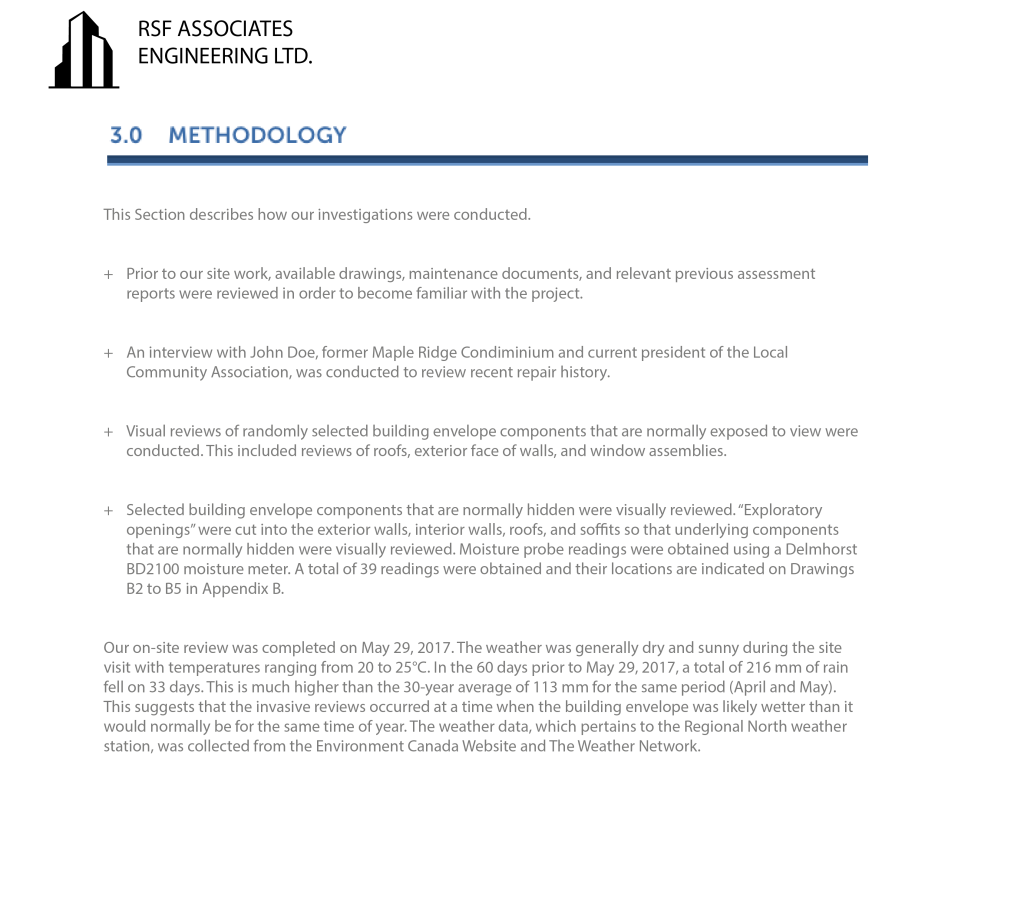
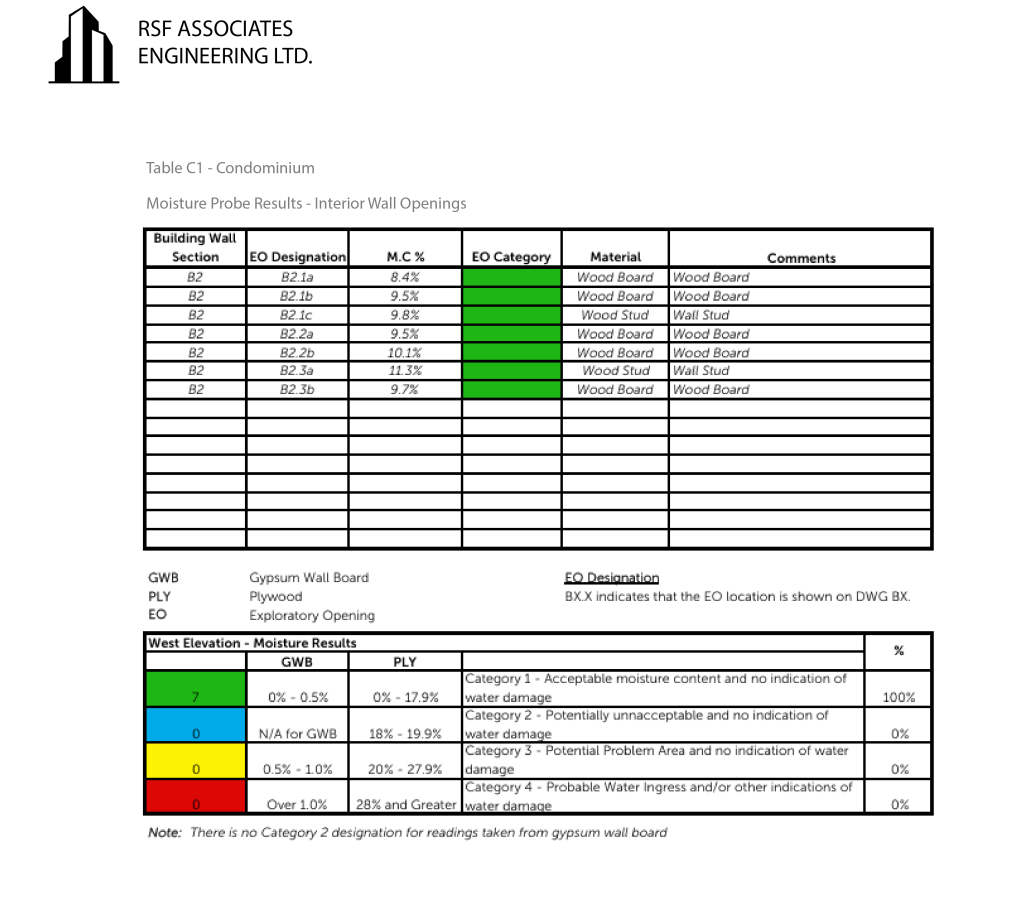
To perform a BECA, building envelope specialists review the condition and performance of all these components. This often includes detailed visual inspections, moisture testing, and even targeted investigative work to better understand how assemblies are performing behind the surface.
The beauty of the BECA is that it doesn’t just document visible damage. A BECA is designed to identify patterns, determine the underlying causes of problems, and evaluate the level of risk (and expense) if those issues continue.
Over time, all this information will help building owners and strata councils make more informed decisions about maintenance, repairs, and long-term planning for their building.
In short, a BECA explains why problems are happening, not just a confirmation that they exist.
Key Components of a Building Assessed in a BECA
A Building Envelope Condition Assessment looks closely at the parts of the building that are responsible for keeping moisture-related damage out, while also being the ones most exposed to all sorts of weather and UV.
While every building is different, most BECAs review several key exterior systems and how they work together:
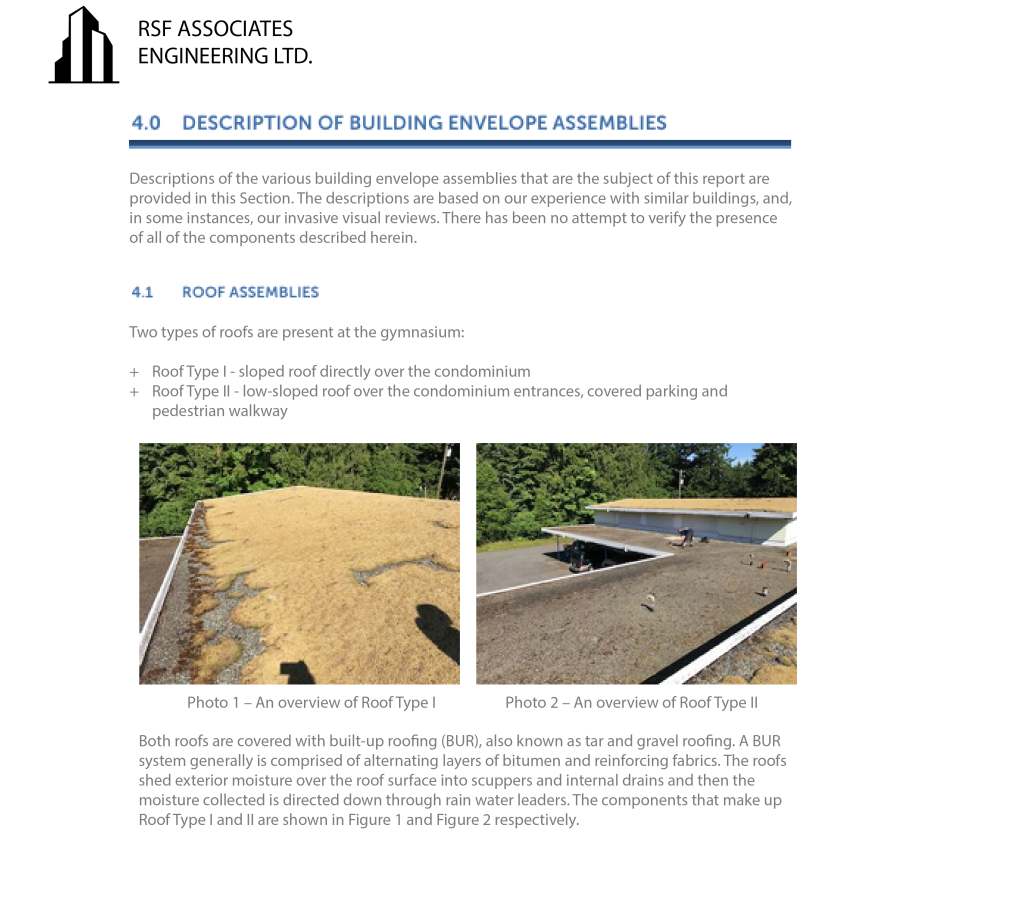
This typically includes roofs, exterior wall assemblies, and cladding systems, which form the primary barrier against wind and rain. Windows and glazing systems are also examined carefully, since they involve multiple materials, moving components, and seals that can fail over time.
Balconies and waterproof membranes are another common focus. These areas are constantly exposed to water and temperature changes, which makes them more vulnerable to deterioration.
Inspectors will also review sealants, flashings, and transition points such as the joints where different materials meet. These areas may seem small, but they are often the most critical parts of the envelope system. Special attention is also given to roof-to-wall connections, deck interfaces, and other intersections, as well as any obvious or visible signs of moisture intrusion like staining, odours, and material deterioration.
An important thing to understand is that your building’s envelope performance often depends less on the large continuous surfaces and more on the details, like where they meet or terminate. A wall may look perfectly sound from the outside, but a failed joint, flashing, or sealant can, over time, allow water to enter and travel behind the surface, where it inevitably causes more and more damage the longer it goes undetected.
This is why BECAs focus on how the entire system works together, and not just how individual components look.
At a glance: Key Building Envelope Components Reviewed in a BECA
- Roofs
Membranes, insulation, drainage systems, and overall weather protection performance
- Walls and Cladding
Exterior siding, panels, and wall assemblies, including signs of movement, wear, or moisture intrusion
- Windows and Doors
Window systems, frames, glazing, and perimeter seals
- Waterproofing Systems
Membranes and coatings at balconies, decks, parkades, and other exposed areas
- Sealants and Joints
Expansion joints, control joints, and transitions between materials
- Flashings and Interfaces
Critical details at roof-to-wall, window-to-wall, and other intersections
- Balconies and Decks
Surface coatings, membranes, railings, and structural interface points
- Water Penetration and Moisture Indicators
Evidence of leaks, staining, efflorescence, or hidden moisture concerns
Common findings in a BECA Report
It’s important to remember that most BECAs uncover issues that are fairly typical for buildings as they age. Remember, a building’s exterior systems are constantly exposed to weather, temperature changes, and movement, so wear and deterioration over time are to be expected.
Some of the most common findings include aging sealants and failed joints, which can gradually lose flexibility as they age and allow water to enter at transition points. Membrane wear or detailing deficiencies are also frequently observed, particularly on balconies and exposed decks where waterproofing materials are under active use and constant stress.
Assessments may also identify areas of localized water ingress where moisture worked its way into the building envelope. In many cases, these issues are linked to construction-era installation or materials that have deteriorated over time or were never intended for long-term performance.
Another less considered but very common factor is the effect of deferred maintenance, where small issues that weren’t addressed early enough or properly will gradually develop into larger (and often more expensive) problems.
While these findings can sound concerning, they shouldn’t be considered unusual, bad luck, or a sign of corners having been cut. In fact, identifying these typical, to-be-expected problems early is exactly the purpose of a BECA.
When problems are discovered at the right time, repairs can often be planned strategically, helping building owners avoid more disruptive and costly work down the road.
Request a Free Consultation
Good to know: Are BECAs Mandatory in BC?
While a Building Envelope Condition Assessment (BECA) is not currently a standalone legal requirement in British Columbia, recent updates to depreciation report regulations are increasing the level of detail required, particularly around the condition of the building envelope.
In many cases, this means strata corporations will need to obtain BECA-level assessments to meet these requirements. As these changes come into effect, BECAs are becoming an increasingly important part of long-term planning and compliance.
How to Read BECA recommendations for your building
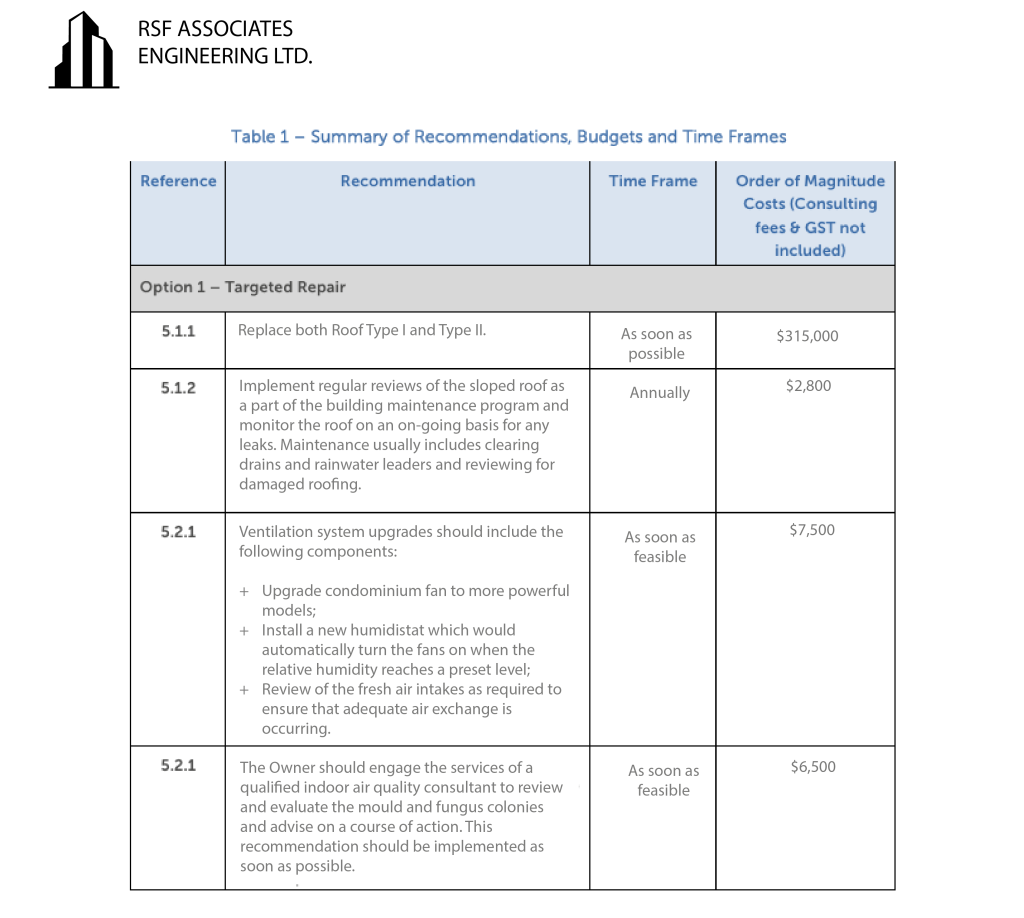
When a BECA report is complete, the findings are usually organized into recommended actions over different timeframes. Understanding these categories can help strata councils and property managers prioritize work without feeling overwhelmed.
Most reports divide recommendations into immediate, short-term, and long-term items. Immediate items typically address active water ingress or conditions that could worsen quickly. Short-term items may involve repairs that should be scheduled in the near future, while long-term items often relate to components approaching the end of their expected service life.
Recommendations also tend to distinguish between maintenance, repair, and replacement. Maintenance might include renewing sealants or improving drainage details. Repairs usually target localized damage, while replacement is reserved for components that have reached the end of their functional lifespan.
Another important element is risk-based prioritization. Not every issue carries the same level of urgency. Some conditions may pose a higher risk of water intrusion or accelerated deterioration, while others can be monitored and addressed as part of future planning.
Finally, it’s important to remember that BECA recommendations are based on available information at the time of the assessment. Visual inspections, testing, and investigative openings provide valuable insight, but there are always limitations and assumptions when evaluating complex building assemblies.
Understanding this context helps boards interpret the report as a decision-making tool — one that supports planning and prioritization rather than prescribing a single fixed path forward.
Remember: Not every finding requires immediate construction, but every finding requires a decision.
Recognizing the differences between a BECA and a Depreciation Report
In a previous post, we talked about depreciation reports. These are long-term financial planning tools used by strata corporations to estimate when major building components may need repair or replacement, and how reserve funds should be structured to pay for them.
A Building Envelope Condition Assessment (BECA) serves a different, but closely related role.
While depreciation reports focus on financial forecasting based on the condition of various building components, which can include HVAC systems, plumbing, roofing, etc, a BECA focuses on the actual technical condition and risk specifically associated with the building’s envelope. It evaluates how exterior systems are performing today, why certain issues may be occurring, and what level of repair or intervention may be required.
In simple terms:
BECA = technical condition and risk of the building envelope
Depreciation report = financial planning for all the building’s many components
The two reports work best when they actually inform each other.
Findings from a BECA can help refine some of the assumptions made in a depreciation report. For example, if a BECA reveals that certain components are aging faster than expected (or performing better than anticipated), those insights can be used to adjust repair timelines and reserve funds for future repairs as needed.
Likewise, when major repairs or upgrades are completed following a BECA, updating the depreciation report helps ensure that the building’s long-term financial planning accurately reflects the most current information.
Together, these two assessments give strata councils and property managers a much clearer picture by combining technical understanding with realistic financial planning.
When you should consider commissioning a Building Envelope Condition Assessment
Many buildings can go years without any detailed review of their exterior systems, simply because problems aren’t always obvious, or the view of building owners may be, “if it ain’t broke…”.
But when questions start to arise about leaks, aging materials, or upcoming repair costs, a Building Envelope Condition Assessment can provide the clarity needed to move forward with confidence.
While every building is different, there are several situations where commissioning a BECA makes a lot of sense:
- Active leaks or water ingress
If water is entering the building — whether through walls, windows, or balconies — a BECA helps identify the source of the problem and determine whether the issue is isolated or part of a larger envelope concern.
- Before major repair or replacement projects
Prior to investing in large exterior repairs, an assessment helps confirm the scope of work and ensures the underlying causes of deterioration are properly addressed.
- When depreciation timelines don’t match reality
Sometimes building components appear to be failing earlier (or later) than they might have been projected in the depreciation report. A BECA can help verify the actual condition of those components and refine those assumptions.
- Prior to large capital decisions
When significant funding decisions are being considered, having a clear understanding of the building’s envelope condition helps strata councils justify budgets and plan responsibly.
- As part of proactive envelope management
Some building owners or stratas schedule periodic assessments simply because they want to stay ahead of problems. Identifying small issues early can help prevent more disruptive and expensive repairs later on.
What to Expect when you order a BECA
Scope
Obviously, the scope and timing of any Building Envelope Condition Assessment will vary from building to building. Factors like building size, architectural complexity, and the level of testing required will all influence how involved the assessment process will be.
In many cases, the work unfolds in multiple stages. It typically begins with a review of the building’s maintenance documents and visual inspections, followed by targeted testing or investigation where needed. It will conclude with a detailed and practical report that outlines the findings and recommendations.
Timelines
The timeline of completing a BECA can also depend on site access, weather conditions, and the depth of investigation required. Some testing procedures need dry, stable conditions or specialized equipment to get accurate results, which can all affect scheduling.
While a BECA does require some upfront investment of time and financial resources, it often leads to better decision-making as you consider the future maintenance of your building down the road. Identifying issues early and understanding the root causes can help reduce the stress and cost associated with repeated investigations or reactive repairs later. This helps save on both consulting and construction costs over the life of the building.
What a BECA is not
Sometimes, understanding what a Building Envelope Condition Assessment doesn’t provide is as important as understanding what it does.
While a BECA is designed to evaluate building conditions, diagnose problems, and help guide future decisions, it is not a construction document or a final repair plan.
For example, a BECA typically does not provide a full scope of construction work to be done. While it may outline recommended repairs or areas that require attention, detailed construction specifications are usually part of a separate design or tendering process with contractors later on.
It’s also not a fixed-price repair estimate. Costs mentioned in an assessment are usually high-level budgeting figures intended to help with planning, not final contractor pricing.
In many cases, the assessment itself is not fully invasive or destructive, meaning, for instance, the whole roof doesn’t need to be pulled apart to determine that there is water leaking on from various points.
Investigators will rely primarily on visual inspection, testing tools, and targeted explorations where necessary. More extensive investigation may be recommended if hidden conditions are suspected.
Finally, a BECA is not a guarantee that future failures won’t occur. Buildings are complex systems exposed to weather, movement, and aging materials. What a BECA does provide is the best available understanding of the current condition and components at risk in order to help owners make informed decisions about maintenance and repairs.
Understanding these boundaries helps strata councils and property managers use the BECA report for what it’s meant to be: a practical guide for smarter building envelope management.
So, how much is a BECA going to cost?
As you can imagine, the cost of a Building Envelope Condition Assessment will vary, depending on the size and complexity of the building, the level of testing required, and the depth of further investigation that may be needed.
For most typical strata or commercial buildings in British Columbia, you can expect to pay a few thousand dollars for a basic envelope assessment to start, with larger or more complex buildings requiring more detailed analysis.
As a very general guideline:
+ Small buildings (50 units or less): assessments may start around $2,500- $6,000
+ Mid-size buildings typically start around $7,000 – $15,000, depending on scope
+ Larger, more complex buildings $15,000 or more, especially when additional testing and/or an engineering analysis is required
Several factors influence the final cost, including:
- Building size, number of units, and number of envelope components
- Height and access requirements (lifts, swing stages, etc.)
- Whether moisture testing, thermal imaging, or in-depth investigation is required
- The complexity of roofing systems, wall assemblies, balconies, etc
While this may seem like a fairly significant upfront expense, it’s small compared with the potential cost of ignoring envelope problems, misdiagnosing, or launching a major repair project without a thorough and proper investigation.
In most cases, a well-timed BECA helps ensure that repair budgets are accurate and targeted, therefore preventing much higher investigative or construction costs later on.
Set Yourself Up, and You’re Building Up for Success
A Building Envelope Condition Assessment delivers the most value when it’s approached with clear goals and good preparation. Strata councils and building owners can help ensure the process runs smoothly by taking a few practical steps early on.
Clearly define the objectives of the BECA
Start by clearly identifying what you want to learn from the assessment. Are you investigating active leaks, evaluating aging components, or preparing for major repairs? Clear objectives are going to help ensure the scope of work addresses the right questions.
Pinpoint known issues and decision needs
If certain areas of the building, such as balconies, windows, or exterior walls, are already causing concern, make sure those areas are included in the assessment scope. Tailoring the investigation to known issues helps produce findings that directly support upcoming decisions.
Communicate and allow for access
Some assessments require access to tenants’ or occupants’ balconies, suites, roof areas, or mechanical spaces. Informing residents and coordinating access ahead of time can prevent delays and keep the investigation process on track.
Use the findings for planning and budgeting
A BECA is really only going to be valuable when its findings feed directly into future planning. The recommendations brought forward can help prioritize repairs, inform budgets, and schedule projects so that work is completed strategically rather than reactively.
Who Performs a BECA (and a few things to watch out for)
Building Envelope Condition Assessments are typically performed by a building envelope engineer, building science consultants, or specialized assessment firms with experience evaluating exterior building systems. These professionals are trained to investigate moisture intrusion, diagnose envelope failures, and recommend appropriate repair strategies.
Because these reports are used to guide major repair decisions and capital planning, the quality of the assessment matters. A thorough BECA should provide clear observations, explain the causes of problems, and outline practical next steps.
When reviewing a BECA report on your building, there are a few warning signs worth paying attention to:
- Reports with vague recommendations
If the report identifies problems but provides little guidance on what should be done next, it may not be detailed enough to support decision-making.
- No clear prioritization or risk ranking
Not all issues carry the same level of urgency. A strong report should help distinguish between immediate concerns and items that can be planned over time.
- Findings not tied to conditions specific to your building
Good assessments connect observations directly to your building’s materials, design details, and exposure conditions. Generic language can make it difficult to act on the findings.
- No clear next steps
The report should ultimately help guide further planning, whether that means deeper investigation, targeted repairs, or just monitoring.
When done well, a BECA becomes a practical roadmap that helps building owners move from a diagnosis to informed action.
A Quick Checklist
Before commissioning, and after receiving a Building Envelope Condition Assessment, it helps to take a step back and make sure the report is going to be used effectively.
This simple checklist can help strata councils and building owners stay focused on the decisions that matter most.
- Define why the BECA is being commissioned
Be clear about the goals from the start. Is it to investigate a specific leak, evaluate aging components, or prepare for major repairs?
- Confirm the scope and level of investigation
Make sure the assessment includes the areas of concern and the level of testing or investigation needed to answer your questions.
- Understand the report’s limitations and assumptions
Most assessments rely on visual inspections and targeted testing. Knowing the boundaries of the investigation will help put the findings in the proper context.
- Review recommendations by risk and timing
Focus on how the report prioritizes issues. Are the findings immediate concerns, short-term repairs, and longer-term planning items? - Align findings with capital and maintenance planning
The real value of a BECA comes when the results feed into budgeting, maintenance programs, and future capital projects.
From Assessment to Action: How WCP supports your building’s BECA findings
A BECA helps identify issues and guide decisions, but the real value comes from turning those findings into practical, well-executed work.
| BECA Report Findings & Recommendations | WCP Building Renewal (Implementation) |
| Identifies cracks and areas of water ingress | Repairs to concrete, crack injection, and waterproofing system installation |
| Estimates the remaining life of sealants and joints | Replaces failing caulking and restores critical transitions |
| Highlights areas with moisture risk or envelope failure | Completes targeted repairs and upgrades to prevent further damage |
| Provides a snapshot of the current condition of the building | Supports ongoing maintenance and long-term protection strategies |
Turn Symptoms into Smart Repair Planning
If your building is experiencing leaks, showing signs of exterior deterioration, or you’re preparing for major repair decisions, you don’t have to sort through all those questions alone.
At WCP Building Renewal, we work closely with strata councils, property managers, and building owners to help interpret building envelope assessments, clarify repair priorities, and connect technical findings with practical next steps. From leak investigations and targeted repairs to larger envelope restoration projects, our goal is to help provide and facilitate well-planned solutions.
It all starts with a simple, no-pressure conversation. We’re happy to review the symptoms in your building that you’re seeing, talk through what a BECA can reveal, and help you determine the best path forward for protecting your building.
Get in touch
To learn more about how a BECA fits into long-term envelope planning and capital planning for your building, contact us at [email protected] or call us at 604-420-5552. Plan with confidence, clarity, and practical guidance tailored to your building’s needs. Reach out today for a free, no-obligation consultation.


