
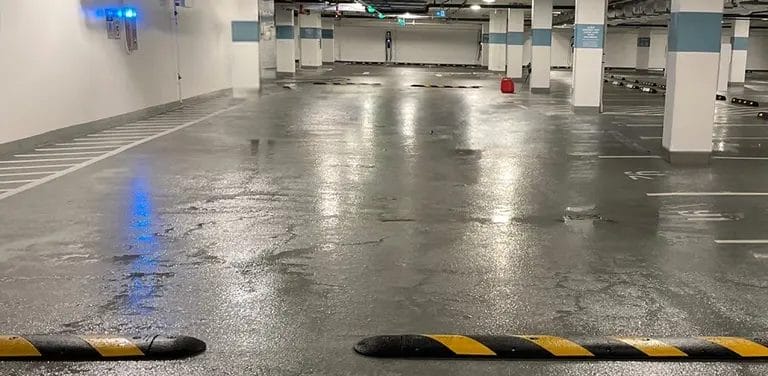
A parkade slab membrane is a critical investment for any structure in this region. Building owners, property managers, and strata groups find it difficult to maintain a parkade in the Lower BC Mainland. Concrete parking surfaces are constantly under stress due to continuous rain and exposure to salt from coastal air or winter de-icing. A parkade is an essential component of your building, not just a place to park automobiles. Concrete cracking, steel corrosion, and possible structural safety problems could result from water seeping in if the waterproofing system fails.
This resource describes the many kinds of parkade slab membranes, the variables that impact replacement prices, and important elements related to the climate of British Columbia.
Why Parkade Waterproofing is Important in BC
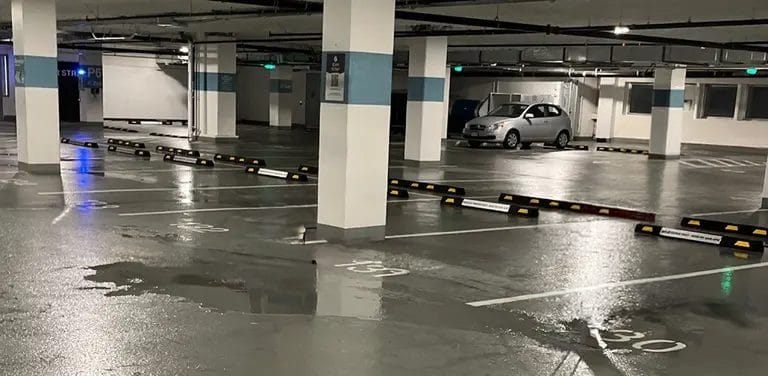
Underground parkade walls and slabs in British Columbia are constantly under hydrostatic pressure due to high water tables and ongoing dampness, particularly in places like Vancouver and Richmond. During rainy winters, cars also introduce chemicals and road salt.
Saltwater reacts with implanted reinforcing steel when it seeps through concrete. The steel expands as a result of this corrosion process, which causes the concrete to deteriorate and split within.
The main line of defense is a high-performance waterproofing membrane that keeps chemicals and water at the surface where they can be appropriately drained.
Request a Free Consultation
Types of Parkade Membrane Systems
The parkade’s particular location and traffic patterns determine which membrane is best. Not every zone needs the same degree of security.
1. Polyurethane Membranes (Single and Two-Component)
Polyurethane systems are the most commonly used for residential and commercial parkades within British Columbia.
- Single-Component Polyurethane
It is usually used in pedestrian areas like stairwells, elevator lobbies, and walkways. Although it provides incredible coverage and flexibility, it is not intended for vehicle traffic. - Two-Component Polyurethane
The standard system for drive aisles, ramps, and parking stalls. It is chemically cured, and it provides superior durability under vehicle traffic and resistance to mechanical stress.
2. PMMA and PUMA Systems
High-performance liquid-applied polymethyl methacrylate (PMMA) and polyurethane methacrylate (PUMA) systems are renowned for their longevity and easy repair.
- Fast Installation
These systems are perfect for high-use parkades where downtime needs to be kept to a bare minimum because they can frequently be walked on within an hour. - Longevity
They are costly at first, but they provide superior resistance to wear, chemicals, and UV rays.
3. Epoxy Coatings
In interior, climate-controlled spaces, epoxy coatings are sometimes used. But in general, they are too stiff for parkades in BC. They are more vulnerable to cracking because they are not flexible enough to withstand heat expansion and contraction.
Comparison of Common Parkade Membrane Systems
| Feature | Single-Part Polyurethane | Two-Part Polyurethane | PMMA / PUMA Systems |
| Primary Use | Pedestrian walkways | Drive aisles & stalls | High-traffic ramps |
| Durability | Moderate | High | Extreme |
| Cure Time | 12 to 24 hours | 24 to 48 hours | 1 to 3 hours |
| Flexibility | High | Moderate to High | High |
| Relative Cost | Lower | Moderate | Higher |
The Repair Process: How It’s Done Right
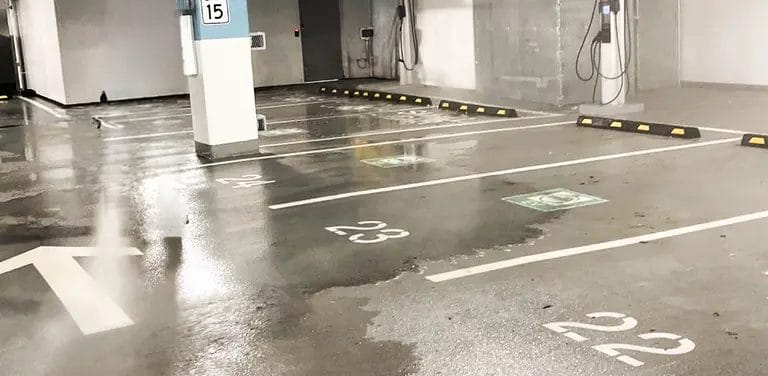
A parkade membrane replacement is a multi-step procedure that calls for accuracy. Delamination frequently occurs quickly when a new coating is applied over a failing one.
Site Assessment and Testing
A thorough inspection is the first step in a proper project. This includes detecting hollow or delaminated concrete, evaluating expansion joints, and locating current leaks. To ensure that the slab is appropriate for coating, moisture testing is frequently necessary.
- Surface Preparation: The Most Critical Step
A large amount of the project’s time and expense is spent on preparation. - Elimination of the Current Membrane
Shot-blasting or grinding must be used to remove unsuccessful coatings.
- Cleaning
To guarantee appropriate adhesion, the surface must be free of pollution from oil, grease, and salt. - Repairs for Concrete
Flexible sealants are used to channel and fill cracks. Damaged sections are taken out and fixed with the proper mortars. - Joint Treatment
The most susceptible parts of a parkade are the expansion and control joints. Before the main membrane is applied, it must be cleaned and resealed using high-movement sealants. - Application and Curing
Membranes are used in several layers:
+ The primer
+ Base coat (layer of waterproofing)
+ Topcoat (layer of clothing)
Aggregate is used in the coating to prevent slippage in high-traffic areas.
Budgeting for Parkade Membrane Replacement
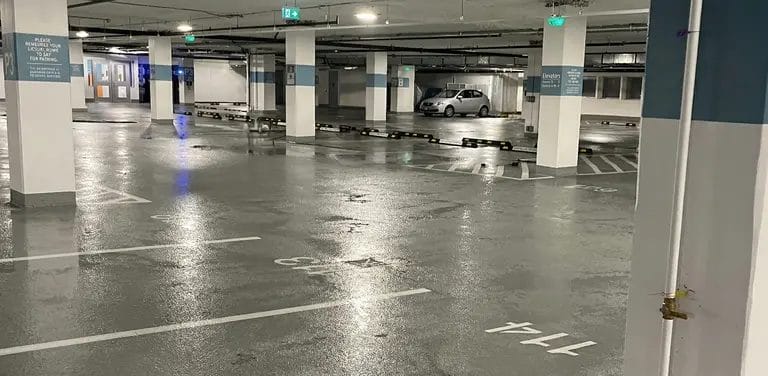
In the Vancouver market, prices vary significantly depending on site conditions.
Typical Pricing Range
For a standard two-component polyurethane system, costs typically range from $35 to $50 per square foot.
Factors That Increase Costs
- Surface Contamination
If there is heavy oil or salt buildup, then it increases preparation effort. - Phasing and Logistics
If the owner wants the parkade to be partially operational, it requires staged work, which ultimately increases labor and time. - Access Constraints
If there are low-clearance areas, then it may limit equipment use, which requires more manual labor. - Extent of Repairs
Hidden damage, such as concrete deterioration or rebar corrosion, if found, can increase costs.
Working with Specialized Trades
Coordination between several trades is frequently required for parkade restoration:
- Teams of mechanics and electricians to remove and restore fixtures
- Controlling traffic to ensure safe operations
- Engineers for depreciation reports and condition evaluations
The WCP Difference: PROTECH Warranty
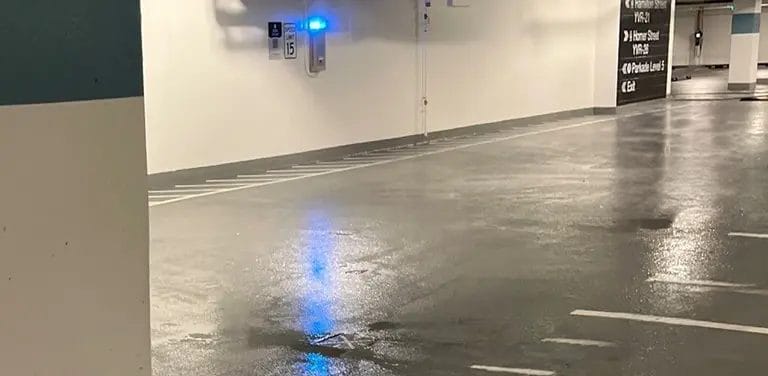
We at WCP Building Renewal are aware that parkade restoration requires a significant financial commitment. We provide a whole maintenance solution (PROTECH Warranty), which extends beyond installation.
PROTECH Warranty & Care Program includes:
- 5-Year Labour & Material Warranty
- Complimentary Building Inspection – 24 Months Post-Completion
- Completion Certificate & Records Package
- Easy-to-Follow Maintenance Manual
Conclusion for Strata Groups
Early intervention is crucial if your depreciation analysis shows that your parkade membrane is almost at the end of its useful life. Complete structural restoration is far more expensive than proactive repairs or recoating.
Get in touch with our team to discuss your next project or for a professional assessment. We are knowledgeable about Vancouver’s climate and long-term building protection.
For further information regarding the integration of parkade slab membranes into the long-term envelope and capital planning of your building, please reach out to us at [email protected] or contact us by phone at 604-420-5552.


